

The 2026 Winter Olympics men’s figure skating competition at the 2026 Winter Olympics has already delivered one of the most talked-about moments in modern skating history: the return — and legalization — of the backflip.
Once banned for nearly five decades, the move has resurfaced in spectacular fashion, reshaping conversations around artistry, risk and athletic evolution. But beyond the viral highlights, the battle for Olympic gold remains a razor-tight contest between technical supremacy and composure under pressure.
At the center of it all stands Ilia Malinin — the reigning world champion and the only skater in history to land a quadruple Axel in competition.
The Backflip Is Back: From Forbidden Fruit to Olympic Spotlight
For decades, the backflip was figure skating’s “forbidden fruit.” The move was banned in 1976 for being deemed too dangerous and lacking artistic value. Judges argued it resembled an acrobatic stunt rather than a skating element.
Its most iconic Olympic appearance came at the 1998 Winter Olympics, when French skater Surya Bonaly defiantly performed a one-footed backflip in protest against restrictive judging standards. She knew she would be penalized — and she was — but the moment became legendary.
Fast forward to 2024: the International Skating Union (ISU) officially legalized the backflip, arguing that it enhances spectacle and modernizes the sport.
At the Milano Cortina Games, Malinin made history by landing the first legal Olympic backflip during the team event, helping Team USA secure gold. It wasn’t just a stunt — it symbolized a generational shift in figure skating philosophy.

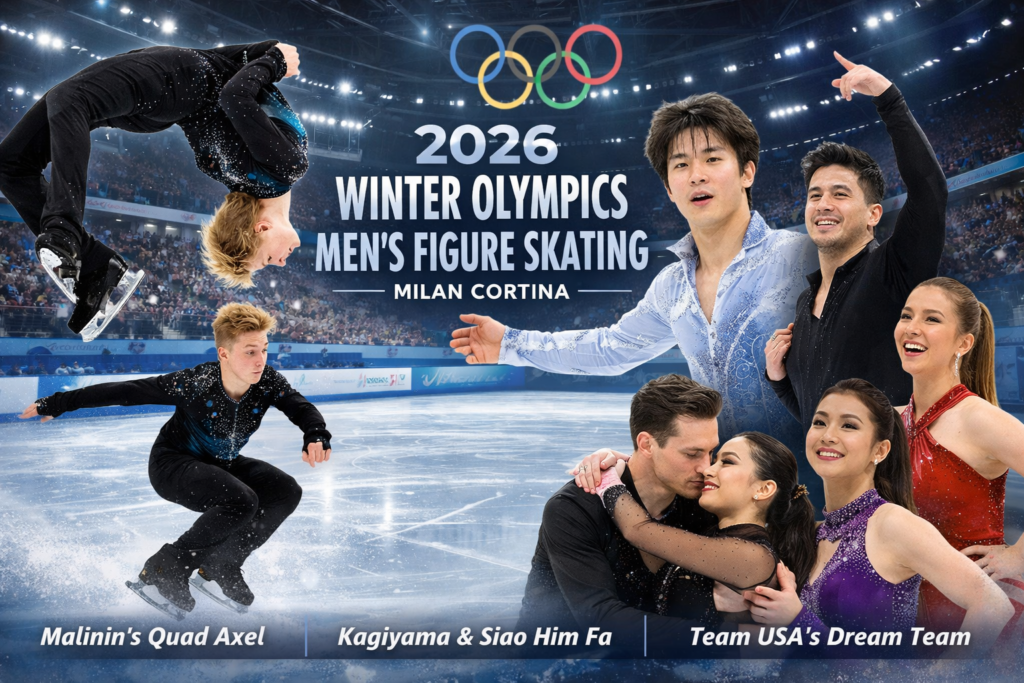
Table of Contents
The Race for Gold: Malinin vs. Kagiyama vs. Siao Him Fa
While the backflip generates headlines, Olympic medals are decided by technical base value, execution scores, and program components.
Here’s how the standings look heading into the men’s free skate:
- Ilia Malinin (USA) – Leads with a five-point cushion
- Yuma Kagiyama (Japan) – 103.07 points
- Adam Siao Him Fa (France) – 102.55 points
Ilia Malinin: The Quad God
Nicknamed the “Quad God,” Malinin is the only skater ever to land the quadruple Axel — a four-and-a-half-revolution jump requiring an extra half rotation because skaters take off facing forward.
He has landed the jump 10 times in competition — all of them his own. No other athlete has successfully completed it in an official event.
His ideal layout includes seven quadruple jumps — a technical arsenal unmatched in the field. The biggest question for the 2026 Winter Olympics men’s figure skating final:
Will he attempt the quad Axel in the long program to seal gold once and for all?
Yuma Kagiyama: The Precision Challenger
Japan’s Kagiyama, the Beijing silver medalist, is known for clean landings, superior skating skills and remarkable consistency. While he may not match Malinin’s technical ceiling, his execution quality can close the scoring gap quickly.
In figure skating, five points can evaporate with a single under-rotated quad.
Adam Siao Him Fa: France’s Entertainer
Siao Him Fa has also embraced the backflip’s return, becoming one of its strongest advocates. Blending athletic power with theatrical presentation, he sits just half a point behind Kagiyama — making this one of the tightest Olympic podium races in years.
Team USA: A Modern Dream Team on Ice
The United States entered the Olympic team event as defending champions and overwhelming favorites. Unlike eras dominated by one superstar, this squad represents extraordinary depth across all four disciplines.
The Anchors of American Skating
- Alysa Liu – Reigning world champion and comeback prodigy
- Amber Glenn – Three-time US national champion
- Madison Chock & Evan Bates – World champions and seven-time US titlists
- Isabeau Levito – World silver medalist
Together, they form arguably the deepest Olympic skating team in American history.
Alysa Liu: The Comeback Prodigy
Liu, once the youngest US women’s champion at 13, stepped away from the sport after the Beijing cycle due to burnout. She traveled, studied at UCLA, rediscovered joy — and returned stronger.
Her comeback culminated in world championship gold, redefining what longevity looks like in women’s skating.
Amber Glenn: Breaking Molds
At 26, Glenn calls herself a “dinosaur” in women’s skating — yet she’s thriving. She became the first openly queer woman to land a triple Axel in competition and recently won her third consecutive national title, the first American to do so since Michelle Kwan.
Her Olympic debut represents resilience and identity on ice.
Chock & Bates: The Veteran Architects
Competing in their fourth Olympics, Chock and Bates combine technical mastery with artistic innovation. Married and long-time partners, they are chasing their first individual Olympic gold after years of dominance.
Their Netflix docuseries and fashion influence have expanded skating’s cultural reach beyond traditional audiences.
Isabeau Levito: The Quiet Technician
Levito’s skating emphasizes continuity and tradition. With family ties to Italy and programs inspired by Italian cinema, Milan feels almost poetic as her Olympic stage.
She represents skating’s artistic lineage — the counterbalance to technical escalation.
How to Watch 2026 Winter Olympics Men’s Figure Skating
The Men’s Free Skate final begins:
- 1:00 p.m. ET (10:00 a.m. PT) – Early groups
- 3:00 p.m. ET – Final seeded groups
In the United States:
- USA Network – Early groups
- NBC – Final groups
- Peacock – Full live coverage and alternate camera feeds
In India:
- Sports18 (Viacom18) – Television broadcast
- JioCinema / JioHotstar – Digital streaming
- Olympics.com – Selected highlights
India at Milano Cortina 2026
India continues to build its Winter Olympic presence with a focused two-athlete delegation.
- Stanzin Lundup – Men’s 10km Interval Start Freestyle (Cross-Country Skiing)
- Arif Khan – Slalom specialist aiming to improve on his Beijing finish
While medals remain elusive, participation and personal bests signal long-term growth for Indian winter sports.
Why 2026 Winter Olympics Men’s Figure Skating Feels Different
This year’s competition reflects four simultaneous evolutions:
- Technical escalation – Quad Axels and backflips
- Artistic freedom – Diverse music, character-driven programs
- Athlete autonomy – Skaters defining careers on their own terms
- Cultural expansion – Streaming, documentaries, social reach
Malinin competes against possibility itself. Kagiyama embodies precision. Siao Him Fa blends spectacle with sport.
Together, they are redefining what Olympic figure skating can be.
The Final Question: Will Malinin Attempt History?
The quad Axel remains skating’s Mount Everest. Attempting it in an Olympic free skate carries immense risk:
- Under-rotation = major deduction
- Fall = five-point swing
- Clean landing = likely untouchable gold
If he lands it cleanly, the 2026 Winter Olympics men’s figure skating title could be decided before the final group finishes.
If he falters, the door opens wide for Kagiyama or Siao Him Fa.
Conclusion: A Defining Olympic Chapter
The Milano Cortina Games may be remembered as the Olympics where:
- The backflip returned
- The quad Axel became mainstream
- Team USA displayed generational depth
- Figure skating crossed deeper into popular culture
The 2026 Winter Olympics men’s figure skating event is not just a medal contest. It’s a referendum on where the sport is headed.
And as the music begins for the final skater, one truth remains:
In Milan, possibility is spinning faster than ever before.
Read More