Artemis II Mission: Humanity’s Return to Deep Space
The next great chapter in human space exploration is unfolding with the Artemis II mission, a historic step that signals humanity’s return to deep space after more than five decades. Led by NASA, this mission is not just about reaching the Moon—it is about building the foundation for sustained exploration beyond Earth, including future missions to Mars.
Artemis II stands as the first crewed mission of the Artemis program, carrying astronauts aboard the Orion spacecraft on a journey around the Moon and back. It represents a powerful combination of advanced engineering, international collaboration, and decades of scientific ambition.
Meet the Artemis II Crew
NASA Credit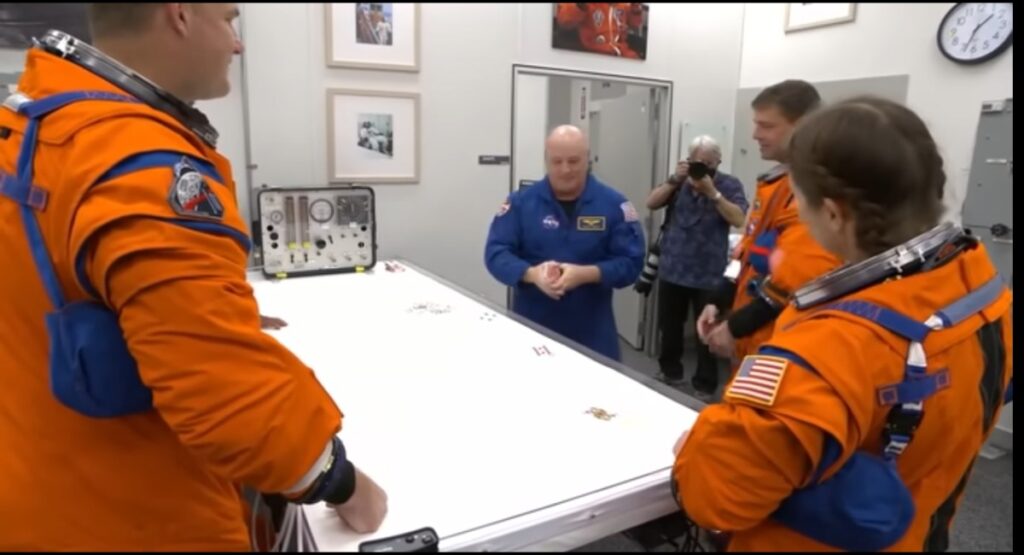
At the heart of this mission are four highly trained astronauts, each bringing unique expertise and experience.
- Reid Wiseman (Commander) – Leading the mission with extensive spaceflight experience
- Victor Glover (Pilot) – Responsible for spacecraft operations
- Christina Koch (Mission Specialist) – Known for long-duration space missions
- Jeremy Hansen (Mission Specialist) – Representing international collaboration
Together, this team symbolizes a global effort to push the boundaries of human exploration.
Mission Overview: A Journey Beyond Earth
The Artemis II mission is designed as a 10-day deep-space expedition that will take astronauts farther from Earth than any human has traveled since the Apollo era. Unlike previous missions that landed on the Moon, Artemis II will perform a lunar flyby, testing critical systems without landing.
The Orion spacecraft, named Integrity, will travel approximately 700,000 miles in total, looping around the Moon before safely returning to Earth.
This mission is crucial because it will:
- Validate life-support systems in deep space
- Test navigation and communication far from Earth
- Demonstrate crew safety during long-duration missions
Pre-Launch Preparations: Precision at Every Step
Preparing for a mission of this magnitude requires extraordinary precision. Every component—from astronaut suits to rocket fuel systems—must function flawlessly.
Crew Suit-Up and Safety Checks
Astronauts donned advanced Orion Crew Survival System suits, designed for both safety and flexibility. These suits feature:
- Fire-resistant materials
- Improved thermal regulation
- Enhanced communication systems
Before launch, teams conducted:
- Leak checks
- Communication tests
- Final system verifications
Fueling the Rocket: Cryogenic Complexity
Fueling the Space Launch System (SLS) rocket involves handling super-cooled propellants like liquid hydrogen and liquid oxygen.
The process includes:
- Chilldown: Cooling fuel lines to prevent thermal shock
- Slow Fill: Gradual introduction of propellants
- Fast Fill: Rapid loading of fuel
- Topping: Final adjustments
- Replenish: Maintaining levels until launch
Each step ensures the rocket remains stable and ready for ignition.
Countdown to Liftoff
The countdown phase is one of the most critical periods in any space mission.
Built-In Holds
Strategic pauses allow engineers to:
- Review system health
- Address anomalies
- Ensure mission readiness
Terminal Countdown
The final 10 minutes are fully automated, minimizing human error.
Key milestones include:
- Tank pressurization
- Activation of onboard systems
- Engine ignition sequence
At T-0, everything must align perfectly for liftoff.
Launch Sequence: Power and Precision
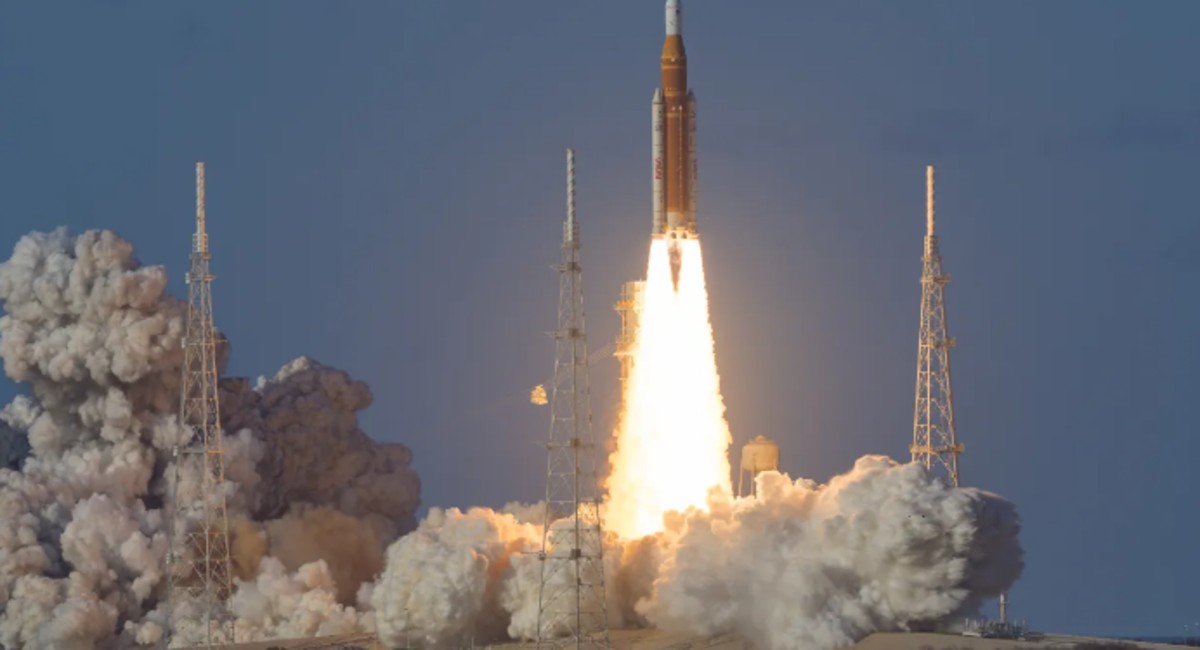
At precisely 6:35 p.m. EDT, the Artemis II mission lifted off, marking a historic moment.
Liftoff قوة (Power)
The SLS rocket generated:
- 8.8 million pounds of thrust
- Boosters contributing 75% of total power
This immense force propelled the spacecraft into the sky, leaving behind decades of anticipation.
Early Flight Milestones
Within minutes:
- The rocket reached supersonic speed
- Passed maximum aerodynamic stress (Max-Q)
- Boosters separated successfully
Stage Separation
As the mission progressed:
- Launch abort system was jettisoned
- Core stage engines shut down
- Upper stage took over propulsion
These transitions are vital for efficiency and mission success.
NASA Credit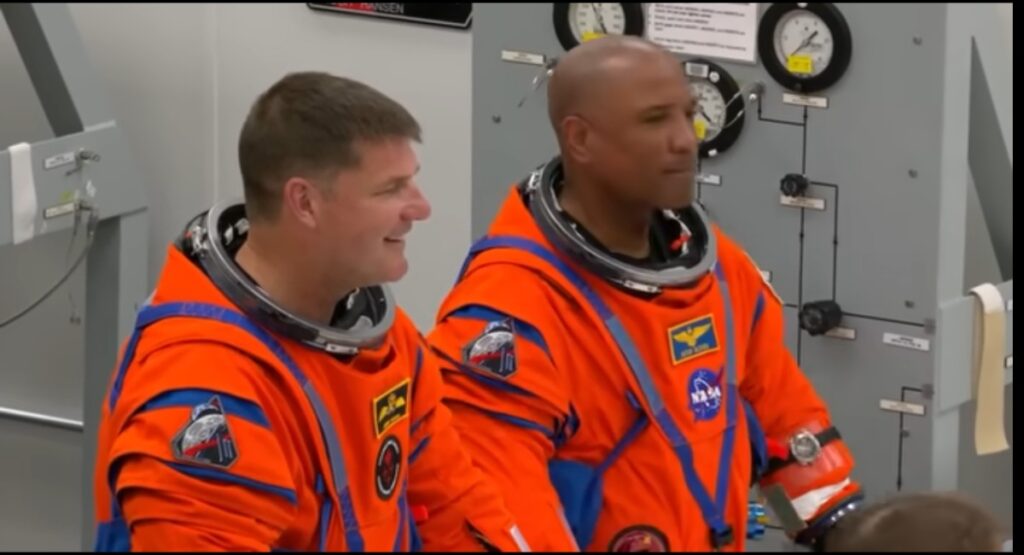
Solar Array Deployment: Powering the Journey
One of the most critical post-launch events was the deployment of Orion’s solar arrays.
Each spacecraft features:
- Four solar array wings
- 15,000 solar cells per wing
- Total wingspan of approximately 63 feet
These arrays rotate to track the Sun, ensuring continuous power supply for:
- Life-support systems
- Communication
- Navigation
Without these arrays, the mission could not sustain long-duration operations.
Orbital Maneuvers: Preparing for Deep Space
After reaching orbit, the spacecraft performs precise maneuvers to prepare for its journey beyond Earth.
Perigee Raise Maneuver (PRM)
- Increases the lowest point of orbit
Apogee Raise Burn (ARB)
- Raises the highest point of orbit
- Positions spacecraft for deep-space trajectory
These maneuvers ensure the spacecraft achieves the correct path toward the Moon.
Mission Operations: Testing the Future
Artemis II is not just a journey—it is a testbed for future exploration.
Proximity Operations Demonstration
Astronauts will manually control the spacecraft to:
- Navigate near another object
- Test docking-like operations
Deep Space System Testing
The mission will validate:
- Life-support systems
- Communication delays
- Navigation accuracy
These tests are essential for future lunar landings and Mars missions.
Technology Behind Artemis II
Space Launch System (SLS)
The SLS is the most powerful rocket ever built, designed for deep-space missions.
Features include:
- Solid rocket boosters
- RS-25 engines
- Massive fuel capacity
Orion Spacecraft
Orion is built for long-duration missions and includes:
- Crew module
- European Service Module
- Advanced life-support systems
Together, these technologies represent the future of space travel.
Why Artemis II Matters
Artemis II is more than just a mission—it is a turning point.
A New Era of Exploration
It marks humanity’s return to deep space after the Apollo missions.
Preparing for Lunar Landings
Future Artemis missions will land astronauts on the Moon, including the first woman and next man.
Pathway to Mars
Everything learned from Artemis II will contribute to future missions to Mars.
Global Engagement and Coverage
The mission has captured worldwide attention, with live coverage available through NASA’s platforms.
Millions of people are following:
- Launch events
- Mission updates
- Astronaut activities
This global interest highlights the universal appeal of space exploration.
A Giant Leap Forward
The Artemis II mission represents a bold step into the future. It combines cutting-edge technology, international collaboration, and human courage to achieve what once seemed impossible.
As the Orion spacecraft journeys around the Moon, it carries not just astronauts—but the hopes of humanity.
This mission is not the end goal—it is the beginning of a new era where humans once again explore the cosmos, pushing beyond boundaries and redefining what is possible.
Disclaimer
The information provided in this article about the Artemis II mission is for general informational and educational purposes only. While efforts have been made to ensure accuracy and reliability, the content is based on publicly available data, mission updates, and general knowledge at the time of writing.
We do not guarantee the completeness, accuracy, or timeliness of the information, as space missions and related details may change due to technical, operational, or scheduling updates by organizations such as NASA or its partners.
This content is not affiliated with, endorsed by, or officially connected to NASA or any other space agency. Any opinions expressed are solely for informational purposes and should not be considered official statements.
Readers are encouraged to verify information through official sources before making any decisions or conclusions based on this content. We shall not be held responsible for any errors, omissions, or any outcomes resulting from the use of this information.
FAQs
1. What is the Artemis II mission?
The Artemis II mission is the first crewed mission of the Artemis program led by NASA. It will send astronauts around the Moon and back to Earth, marking humanity’s return to deep space after more than 50 years.
2. Who are the astronauts on Artemis II?
The mission crew includes:
- Reid Wiseman (Commander)
- Victor Glover (Pilot)
- Christina Koch (Mission Specialist)
- Jeremy Hansen (Mission Specialist)
3. What is the main goal of Artemis II?
The primary goal is to test spacecraft systems, life-support technology, and crew operations in deep space before future missions land humans on the Moon and eventually travel to Mars.
4. Will Artemis II land on the Moon?
No, Artemis II will not land on the Moon. It is a lunar flyby mission, meaning the spacecraft will orbit around the Moon and return to Earth.
5. How long is the Artemis II mission?
The mission is expected to last around 10 days, including travel to the Moon and back.
6. What spacecraft is used in Artemis II?
The mission uses the Orion spacecraft, designed for deep-space travel and equipped with advanced life-support and navigation systems.
7. What rocket launches Artemis II?
Artemis II is launched using the Space Launch System (SLS), the most powerful rocket developed by NASA for human space exploration.
8. How far will Artemis II travel?
The spacecraft will travel approximately 700,000 miles (1.1 million km) during its mission around the Moon and back.
9. Why is Artemis II important?
Artemis II is crucial because it:
- Tests human survival in deep space
- Validates spacecraft systems
- Prepares for future Moon landings
- Supports long-term goals of Mars exploration
10. What happens after Artemis II?
After Artemis II, future missions like Artemis III aim to land astronauts on the Moon, including the first woman and the next man.
11. How is Artemis different from Apollo missions?
While Apollo focused on short-term Moon landings, Artemis aims for:
- Long-term lunar presence
- Advanced technology
- Preparation for Mars missions
12. How is the spacecraft powered in space?
The Orion spacecraft uses solar arrays with thousands of solar cells to generate electricity and support onboard systems.
13. Can the crew manually control the spacecraft?
Yes, Artemis II includes tests where astronauts will manually maneuver the spacecraft to demonstrate control capabilities in space.
14. Where can I watch Artemis II mission updates?
You can follow updates and live coverage on:
- NASA+
- YouTube
- Official Artemis mission blog
15. When is Artemis II launching?
The mission is scheduled based on mission readiness and conditions, with a planned launch window in the mid-2020s.