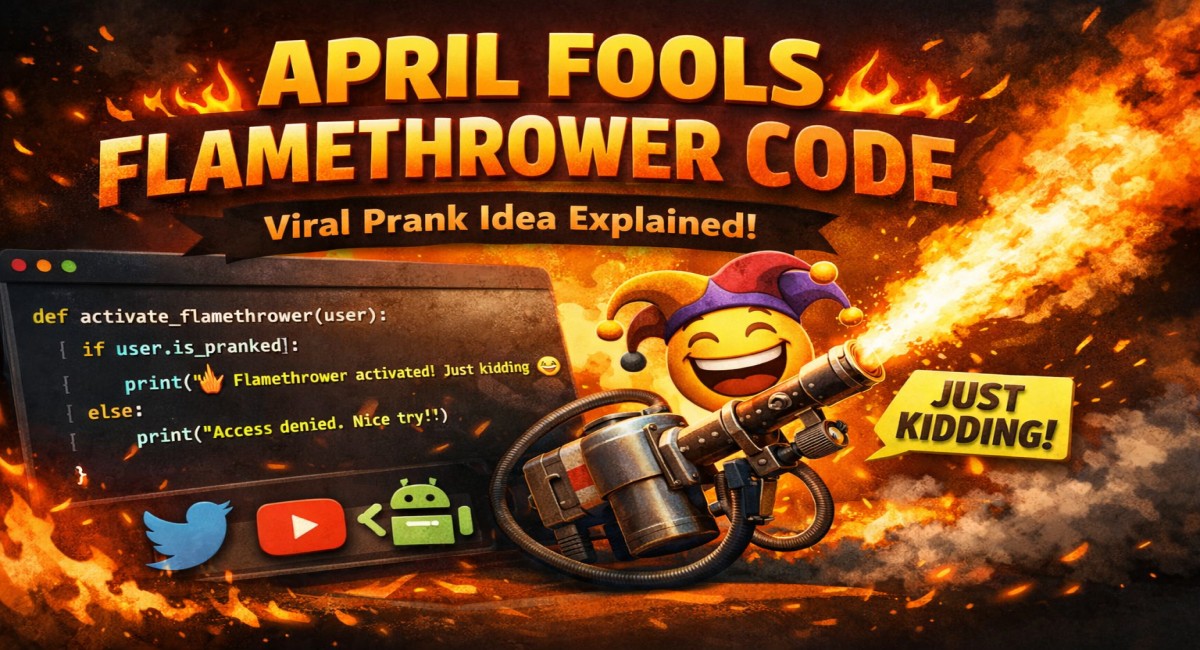
April Fools Flamethrower Code: The Ultimate Prank Idea That Went Viral
Every year on April 1st, the internet explodes with creativity, chaos, and clever tricks. From fake product launches to unbelievable announcements, April Fools’ Day has become a playground for pranksters worldwide. But among the most bizarre and intriguing ideas to ever surface online is the concept of an “April Fools Flamethrower Code.”
At first glance, it sounds dangerous, absurd, and completely unrealistic. But that’s exactly what makes it so captivating. Is it real? Is it a prank? Or is it something more symbolic of internet culture’s love for exaggeration?
In this article, we’ll explore what the “April Fools Flamethrower Code” really is, why it went viral, how it fits into modern prank culture, and how you can create your own safe and hilarious April Fools prank inspired by it.
What is the April Fools Flamethrower Code?
The phrase “April Fools Flamethrower Code” typically refers to a fictional or joke-based concept where a piece of code or software supposedly activates a flamethrower-like feature.
Of course, in reality, this is not meant to be taken literally.
Instead, it represents:
- A satirical take on coding culture
- A meme-style prank idea
- A fake “developer joke” that circulates on forums and social media
Often, developers or pranksters will share snippets of code that appear serious but contain humorous elements—like functions named activateFlamethrower() or variables such as dangerLevel = MAXIMUM.
These jokes play on the imagination, making people pause and think: “Wait… is this real?”
Why Did It Go Viral?
The “flamethrower code” idea became popular because it hits the perfect combination of:
1. Shock Value
The word “flamethrower” immediately grabs attention. It suggests danger, power, and unpredictability.
2. Tech Humor
Developers love inside jokes. Fake code that looks real—but does something absurd—is a classic example.
3. Internet Culture
Modern memes thrive on exaggeration. The more ridiculous the idea, the more shareable it becomes.
4. April Fools Timing
Posting such a concept on April 1st makes it believable enough to trick people, yet absurd enough to entertain.
A Classic Example of Flamethrower Joke Code
Here’s a safe, fictional, and humorous example of what people mean by “flamethrower code”:
def activate_flamethrower(user): if user.is_pranked: print(“🔥 Flamethrower activated! Just kidding 😄”) else: print(“Access denied. Nice try!”) activate_flamethrower(“April Fool”)This code doesn’t do anything harmful—it simply demonstrates how humor can be embedded into programming.
The Psychology Behind Such Pranks
The popularity of something like the “April Fools Flamethrower Code” isn’t random. It taps into human psychology in several ways:
Curiosity
People are naturally drawn to unusual and extreme ideas.
Surprise Factor
A prank works best when it subverts expectations.
Social Sharing
Funny or shocking content gets shared quickly, especially on platforms like Reddit, Twitter, and Instagram.
Believability vs Absurdity
The best April Fools jokes sit right between “this could be real” and “this is ridiculous.”
Real-World Inspiration Behind the Idea
Interestingly, the concept might also be loosely inspired by real-world tech humor and bold product ideas.
For example:
- Companies sometimes launch fake gadgets
- Developers create Easter eggs in software
- Tech influencers exaggerate features for comedic effect
The flamethrower idea exaggerates this trend to the extreme, making it instantly memorable.
How to Create Your Own “Flamethrower Code” Prank
If you want to join the fun this April Fools’ Day, you can create your own version of this prank—without any risk.
Step 1: Choose a Platform
Decide where you want to share your prank:
- Social media
- GitHub
- WhatsApp groups
- Blog or website
Step 2: Write Fake but Realistic Code
Make it look authentic but add humorous twists.
Example:
function launchFlamethrower() { console.log(“Initiating system…”); setTimeout(() => { console.log(“🔥 Just kidding! Happy April Fools!”); }, 2000); }Step 3: Add a Dramatic Description
Make it sound serious:
“This experimental code enables advanced thermal output for next-gen devices.”
Step 4: Reveal the Joke
Always ensure your audience knows it’s a prank—eventually.
Safety Note: Don’t Take It Literally
It’s important to clarify:
The “April Fools Flamethrower Code” is purely fictional and meant for humor.
Never attempt to:
- Build dangerous devices
- Mislead people in harmful ways
- Create panic or fear
The goal of April Fools is laughter, not risk.
Best Alternatives to Flamethrower-Themed Pranks
If you like the idea but want something more practical, try these:
1. Fake Software Update
Create a screen that says:
“Installing Flamethrower Module v2.0…”
Then reveal the joke.
2. Voice Assistant Trick
Program a response like:
“Flamethrower mode activated… Just kidding!”
3. Desktop Prank
Change someone’s wallpaper to a “control panel” with fake dangerous options.
How Brands Use Similar Humor
Big companies often use exaggerated concepts like this for April Fools campaigns.
They create:
- Fake products
- Unreal features
- Over-the-top announcements
Why?
Because it:
- Increases engagement
- Builds brand personality
- Encourages sharing
The flamethrower concept fits perfectly into this style of humor.
The April Fools Flamethrower Code is a perfect example of how creativity, humor, and technology collide in today’s digital culture. It’s not about actual flames or dangerous tools—it’s about imagination, exaggeration, and the joy of pulling off a clever prank.
In a world where content spreads in seconds, the most memorable ideas are often the most outrageous ones. And nothing says outrageous quite like a “flamethrower controlled by code.”
So this April Fools’ Day, embrace the spirit of fun. Create something unexpected, make people laugh, and remember—the best pranks don’t burn bridges… they spark smiles.
FAQs
Is the flamethrower code real?
No, it is a fictional and humorous concept used for pranks.
Can code actually control a flamethrower?
In real-world engineering, code can control devices—but this specific idea is not practical or safe for public use.
Why do people share such jokes?
Because they are funny, surprising, and highly shareable.
Is it safe to create similar pranks?
Yes, as long as they are harmless and clearly jokes.