

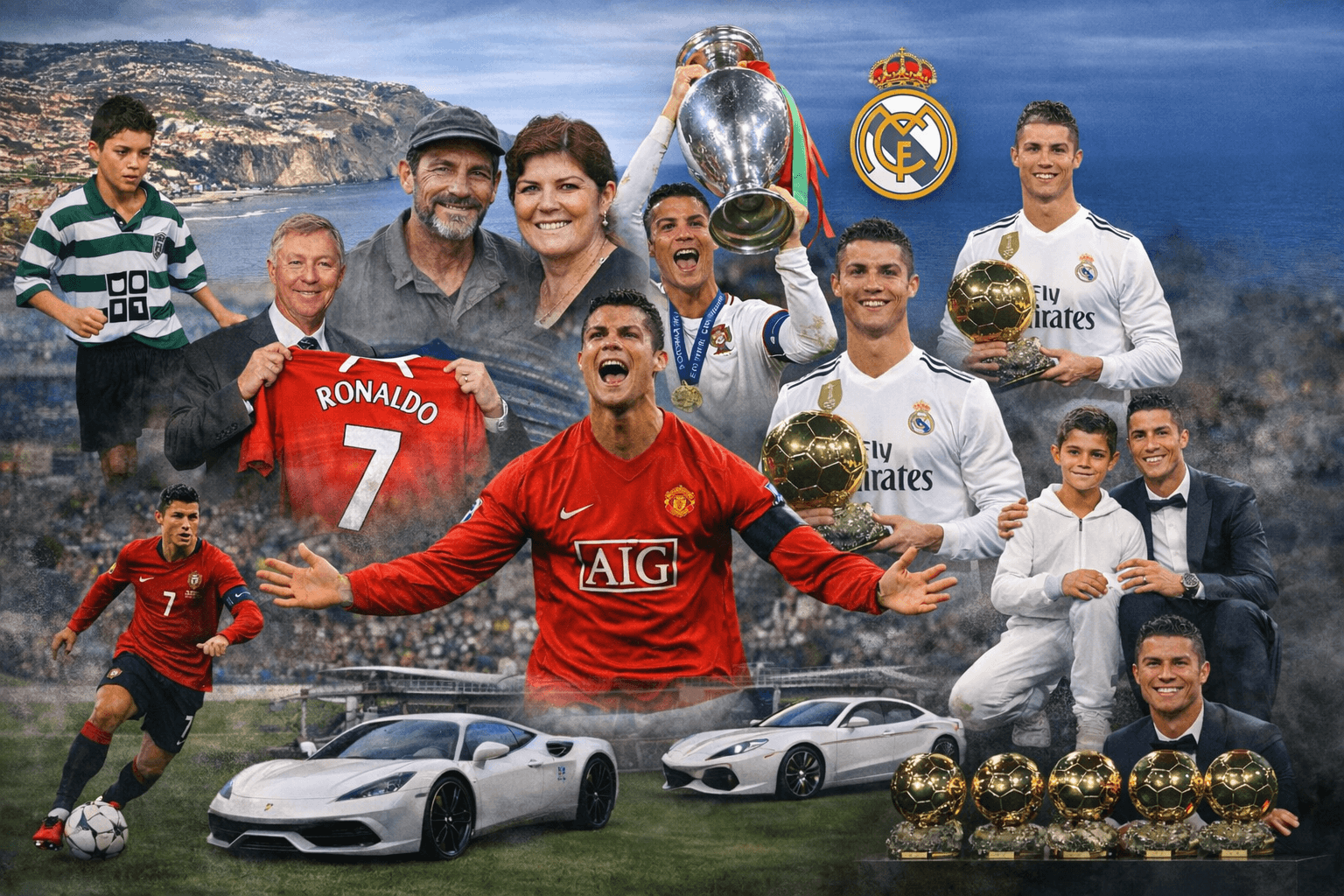

Cristiano Ronaldo dos Santos Aveiro is more than a footballer; he is a symbol of ambition, resilience, discipline, and self-belief. Born on February 5, 1985, in Funchal, Madeira, Portugal, Ronaldo rose from a modest upbringing to become one of the most celebrated and influential athletes in the history of sport. His journey—from barefoot games on the streets of Madeira to becoming the first men’s player to score 900 career goals in official matches—is a story defined by sacrifice, obsession with excellence, and an unbreakable will to succeed.
Follow @CristianoWidely regarded as one of the greatest footballers of all time, Ronaldo’s career spans multiple countries, leagues, and generations. A five-time Ballon d’Or winner (2008, 2013, 2014, 2016, 2017), he has dominated English, Spanish, Italian, and Saudi football while rewriting record books with both club and country. His influence extends far beyond the pitch—into global culture, business, fitness, and philanthropy—making him one of the most recognizable human beings on the planet.
Follow Cristiano Ronaldo on X
Tweets by @CristianoEarly Life: Roots in Madeira
Cristiano Ronaldo was born in São Pedro, Funchal, and raised in Santo António, one of Madeira’s poorest neighborhoods. He was the youngest of four children born to Maria Dolores dos Santos Aveiro, a cook and cleaner, and José Dinis Aveiro, a municipal gardener and part-time kit man. The family lived a humble life, sharing a small home where Ronaldo and his siblings often slept in the same room. Money was scarce, but love, discipline, and family unity were abundant.
His second name, “Ronaldo,” was chosen in honor of his father’s favorite actor, Ronald Reagan, who was also the President of the United States at the time. From an early age, football was Ronaldo’s escape and passion. While other children played casually, Cristiano played obsessively—often skipping meals, homework, and rest just to keep a ball at his feet.
First Steps in Football
Ronaldo’s football journey began at Andorinha, a small amateur club where his father worked as the equipment manager (kit man). From 1992 to 1995, young Cristiano showcased a natural flair that separated him from children twice his age. His speed, balance, and hunger to score were evident even then.
After Andorinha, he spent two years at Clube Desportivo Nacional, where his talent matured further. By the age of 12, Ronaldo had already built a reputation as one of Madeira’s most exciting young prospects. His performances earned him a trial with Sporting Clube de Portugal (Sporting CP) in 1997, which he passed with ease. Sporting signed him for a modest £1,500, a decision that would later be remembered as one of the greatest bargains in football history.
Sacrifice and Separation
Joining Sporting CP required Ronaldo to leave Madeira and move to Alcochete, near Lisbon. The transition was emotionally painful. At just 12 years old, he was separated from his family, culture, and comfort. Ronaldo later admitted that loneliness and homesickness pushed him to tears many nights. However, these hardships also forged his mental strength.
At school, Ronaldo struggled with discipline and academics. He was once expelled for throwing a chair at a teacher whom he felt had disrespected him. Soon after, at age 15, Ronaldo faced a potentially career-ending setback: he was diagnosed with tachycardia, a heart condition that caused an abnormally high resting heart rate. Surgery was required immediately.
Using a laser procedure to correct the cardiac pathways, doctors successfully treated the condition. Remarkably, Ronaldo resumed training just days later. This moment became one of the defining chapters of his life—proof that adversity would never break his pursuit of greatness.
Follow @CristianoRise at Sporting CP
Ronaldo progressed rapidly through Sporting’s youth system, playing for the under-16, under-17, under-18, and B teams, all within a single season. By 2002, he made his debut for Sporting’s first team, quickly impressing with his dribbling, pace, and fearlessness.
His breakout moment came in August 2003, when Sporting defeated Manchester United in a friendly match to inaugurate the Estádio José Alvalade. Ronaldo tormented United’s defense so badly that players reportedly urged manager Sir Alex Ferguson to sign him immediately—on the flight back to Manchester.
Manchester United: The Making of a Superstar (2003–2009)
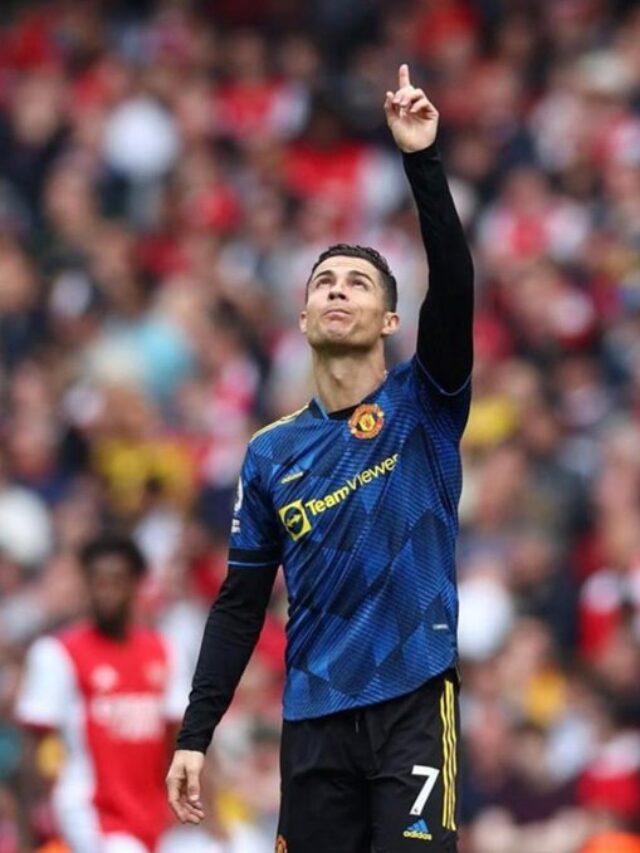
Ronaldo signed for Manchester United in 2003, becoming the club’s first-ever Portuguese player. Initially, he requested the number 28 shirt, feeling unworthy of the legendary number 7 once worn by George Best, Eric Cantona, and David Beckham. Ferguson insisted he wear number 7—a decision that would redefine football branding forever.
Ronaldo’s early years in England were marked by flair, stepovers, and inconsistency. Critics accused him of showboating, but Ferguson believed in his potential. Gradually, Ronaldo transformed from a flashy winger into a complete forward.
Controversy and Growth
The 2006 World Cup brought controversy when Ronaldo was criticized for his role in the dismissal of England’s Wayne Rooney, his Manchester United teammate. The backlash was intense, but Ronaldo responded the only way he knew—by improving relentlessly.
Peak Years
Between 2006 and 2008, Ronaldo reached extraordinary heights. In 2007, he won:
- PFA Young Player of the Year
- PFA Player of the Year
- FWA Footballer of the Year
- Sir Matt Busby Player of the Year
The 2007–08 season was historic. Ronaldo scored 42 goals, won the European Golden Shoe, helped United lift the Premier League and the UEFA Champions League, and claimed his first Ballon d’Or in 2008. He was officially the best player in the world.
Real Madrid: Becoming Immortal (2009–2018)
In 2009, Real Madrid signed Ronaldo for a world-record £80 million (€94 million / $131 million). The pressure was enormous—but Ronaldo thrived on it.
Goal-Scoring Machine
At Real Madrid, Ronaldo evolved into the most lethal goal scorer football had ever seen. He shattered records season after season:
- 40 La Liga goals (2010–11) – a league record at the time
- 46 league goals (2011–12) – personal best
- 52 goals in 43 games (2013–14)
In October 2015, he became Real Madrid’s all-time leading goal scorer, finishing his Madrid career with 450 goals in 438 matches.
Champions League Royalty
Ronaldo led Real Madrid to four Champions League titles (2014, 2016, 2017, 2018), including an unprecedented three consecutive titles. His performances in knockout stages earned him the nickname “Mr. Champions League.”
Ballon d’Or Dominance
Ronaldo won four Ballon d’Or awards during his Madrid years (2013, 2014, 2016, 2017), cementing his rivalry with Lionel Messi as the defining duel of modern football.
Juventus and Return to Manchester United
In 2018, Ronaldo joined Juventus for €112 million, conquering Serie A and winning league titles despite adapting to a new tactical environment. He won the Supercoppa Italiana and Coppa Italia, scoring over 100 goals for the club.
In 2021, Ronaldo returned to Manchester United, but the reunion was turbulent. Despite scoring crucial goals, the club struggled. By November 2022, his contract was terminated by mutual agreement.
Al Nassr and the 900-Goal Milestone
In December 2022, Ronaldo signed with Al Nassr in Saudi Arabia, marking a new chapter. In 2024, he achieved the unimaginable—900 career goals, becoming the first man in football history to do so in official matches.
International Career: Portugal’s Eternal Captain
Ronaldo debuted for Portugal in 2003 and became captain in 2008. His international legacy includes:
- UEFA Euro 2016 winner
- UEFA Nations League 2019 winner
- First male player to score at five World Cups
- Over 130 international goals
In 2025, he led Portugal to another Nations League title, scoring in both the semifinal and final—proving his longevity at age 40.
Business, Endorsements, and Billionaire Status
Ronaldo’s global popularity made him one of the most marketable athletes ever. He signed a lifetime contract with Nike in 2016 and built the CR7 brand, spanning fashion, footwear, fragrances, hotels, and gyms.
In October 2025, Ronaldo became the world’s first active footballer billionaire, with an estimated net worth of $1.4 billion.
Family, Personality, and Charity
A deeply family-oriented man, Ronaldo is a devoted father to:
- Cristiano Ronaldo Jr.
- Alana Martina
- Mateo
- Eva Maria
- Bella Esmeralda
e dislikes smoking, dishonesty, and laziness. Off the pitch, he enjoys cooking, trivia shows, and learning new things. Ronaldo is also a committed philanthropist, donating millions to hospitals, disaster relief, and children’s charities worldwide—including major aid efforts after the Southeast Asian tsunami
Legacy: More Than Football
From an impoverished childhood to global superstardom, Cristiano Ronaldo’s life is a testament to hard work, discipline, and belief. He was unwanted, doubted, criticized, and counted out—but never defeated. His story proves that talent opens doors, but obsession keeps them open.
Cristiano Ronaldo is not just a football legend.
He is a mindset.
A standard.
And a reminder that destiny can be rewritten—one goal at a time.
Disclaimer: This content is provided for general informational and educational purposes only. All information is based on publicly available sources and is not officially endorsed.

 By
By
 By
By