

From Viral Emails to Gravity-Defying Backflips: The Stories Defining Milano-Cortina 2026
Milan, Italy — The Milano-Cortina 2026 Winter Olympics were always going to be a place where unforgettable sporting achievements would be made. However, what has been surprising is how easily the worlds of elite sport, the internet, and human drama have merged at the largest winter sporting arena in the world. Over the last few days, the Olympics have offered a trio of stories that have grabbed the world’s attention: a Canadian figure skater whose polite university email has gone viral, an American phenom who is pushing the boundaries of what is possible on ice, and a Czech snowboarder who has stunned the competition to take Olympic gold.
These stories have ensured that the Milano-Cortina 2026 Winter Olympics are more than a competition to win medals. They are a reflection of a new Olympic era, where authenticity can travel as quickly as sporting excellence.
Image Credit: © Getty Images / Olympics Archive (for illustrative purposes)

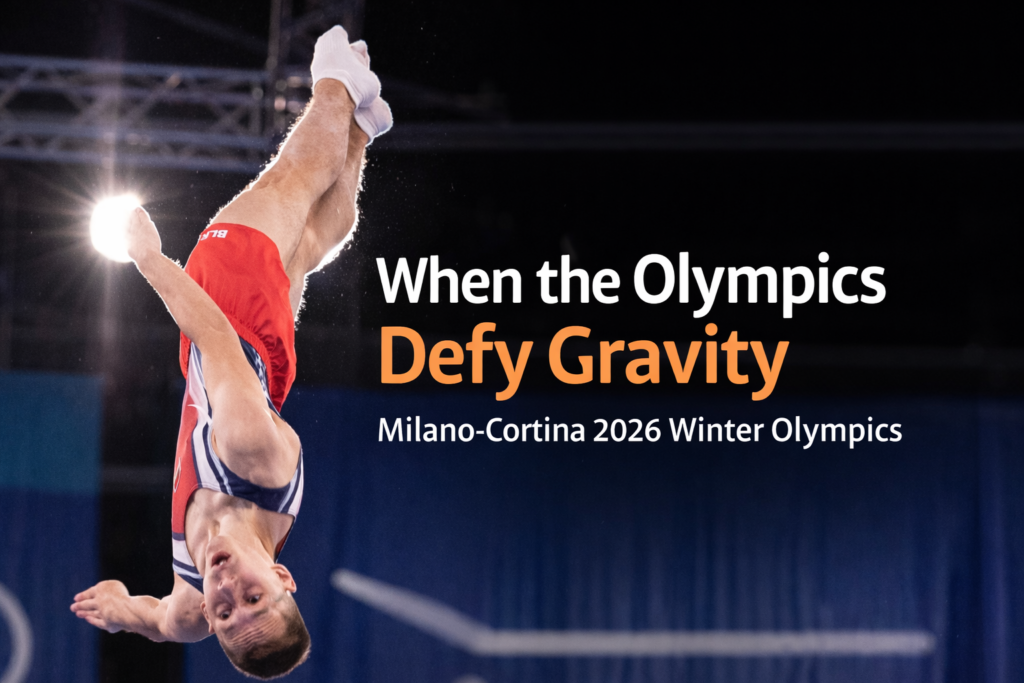
Table of Contents
Madeline Schizas: When Olympic Pressure Meets Student Life
Canadian figure skater Madeline Schizas went to Milan with her mind fixed on the event, not social media stardom. However, already on Friday night, she became one of the most talked-about athletes at these Olympic Games.
The spark originated from the camera capturing Schizas’ confused facial expression related to her scores after the women’s short program. The image then spread rapidly through social media, touching many hearts, especially those who felt their hard work wasn’t recognized. What happened next made her a viral phenomenon.
The day after, Schizas shared a screenshot of an email to her sociology professor at McMaster University. The message was clear but still very nice and humorously subtle: Just yesterday Schizas competed at the Olympics and assumed she still had a day to complete the assignment, not just hours. She asked – nicely – for a one-day extension by providing a link to a Canadian Olympic Committee press release:
What Schizas had hoped would entertain his social circle of friends now reached millions. Sports media outlets, entertainment sites, and even Italian newspapers carried the story. In a Games that was all about high intensity and high pressure, the juxtaposition of an Olympian managing triple jumps and deadlines at university reached a global level.
By Sunday morning, Schizas had her green light. The email sent to her by her professor—in response to her “Can I finally start?”—was later obtained from McMaster University and reads like this: “This moment is exceptional; you should concentrate on the competition first, and then deliver.” This exchange became emblematic of balance, humility, and humor in the context of high-performance sport.
I was thinking, honestly, it was gonna be my friends, maybe a dozen or two students, they could have a chuckle at it. And then, out of nowhere, I suppose, like I was gonna forget, I mean, it’s the Olympics, I guess. There’s just millions of people reading my email.
Canada’s Team Effort and Narrow Margins
On the ice, Canada’s figure skating team had a bit of hope and disillusionment as they took part in the team event. The team managed a fifth-place finish with 54 points over three days and eight segments.
Schizas, 22-year-old of Oakville, Ont., struggled in the women’s free skate, falling on her opening triple Lutz and ending up with 125.00 points. The performance all but ended Canada’s medal chances, despite a slew of strong skate programs by her teammates later in the day.
The pairs dance team of Lia Pereira and Trennt Michaud gave the crowd a highlight performance for Canada. Their performance to the music of Gladiator was a personal best for them, achieving 134.42 points, to also complete almost all elements of the dance. Their relief and joy could be seen when they celebrated their performance with a series of high-fives, hugs, and raised fists, even though they finished fifth in this segment.
Training alongside Schizas at Milton Skating Club, Pereira and Michaud could not help but chuckle at the fast-rising fame of their teammate. Michaud, who also skates out of McMaster, joked that his school had magically brought itself into the global spotlight.
High-performance director Mike Slipchuk named the moment viral exactly in keeping with what kind of person Schizas is. Schizas’ wit usually passes by without people really noticing—healbeit until such time when you can no longer miss it.
While some of his fellow Canadian teammates were not immediately aware of the post, Stephen Gogolev of Toronto says he had seen it briefly but did not fully realize its enormity. However, Stephen Gogolev was an important figure on the ice as he secured a spot in the championship with a strong short program and a dominating free skate to Rachmaninoff’s Piano Concerto No. 2, scoring a total of 171.93.
Gold, Silver, and Bronze: A Global Podium
The home country won the team competition, winning the gold medal with 69 points, edging Japan by one point. The decisive match came in the men’s free skate, which saw Ilia Malinin dominate Shun Sato of Japan, despite slightly wobbly landings.
Italy, as the home team, got the crowd on their feet with a bronze-medal performance, thanks in part to a scorching ride by Matteo Rizzo. Georgia took their position in the fourth spot with 56 points.
Ilia Malinin: The Quad God Takes Center Stage
Schizas is relatable, accessible to the audience, while Malinin is the epitome of entertainment. The 21-year-old American figure skater is the face of these Games from an American perspective.
He is known by the moniker “Quad God” because he was literally the first figure skater to land a quadruple Axel in competition. He came into Milan with much hype and began delivering right away. His skate moves have been included in Olympic advertising, such as appearing on screens broadcasting Super Bowl events, where he zooms by while jumping out of his signature move.
But the thing that really got the conversation going was his back flip in the team event. This element hadn’t been seen in Olympic skating in nearly three decades. The last time a back flip was seen was in the 1998 Winter Games in Nagano, Japan, as France’s Surya Bonaly executed the jump, though she ultimately violated the rules in place at the time.
Backflips are actually permitted these days, even when judges do not reward it with the highest scores, but it still remains a standout moment in figure skating aesthetics. A bold and symbolic gesture of connection between two eras, the decision to pull it off, on the part of Malinin, remains noteworthy.
His mystique was being fueled by an additional spark, and this was in the form of his vibrant yellow skate laces worn during practice, which are no doubt a nod to NHL superstar Alex Ovechkin. They were, in fact, a gift from NHL star Alex Ovechkin, who plays for the Washington Capitals, a short drive from the Virginia suburb of Fairfax, Malinin’s hometown.
Being born to parents who previously skated for Uzbekistan and who is fluent in Russian, Malinin is a true reflection of multicultural heritage, much like the universality found within these Olympic Games. Having already secured gold on the team front, he now has his eyes on the individual events, and these expectations remain through the roof.
A Snowboard Shock: Maděrová’s Golden Moment
While the figure skating session got the most media attention, the snow event surprisingly recorded one of the biggest upsets at Milano-Cortina. At the women’s snowboard parallel giant slalom, 22-year-old Zuzana Maděrová soared to greatness to shock the competition at the Livigno Snow Park.
Maděrová wasn’t a name that everyone considered to be a favorite. That honor belonged to Ester Ledecká from the Czech Republic, who sought to win her third gold medal in a row. She, however, made an early mistake that saw her eliminated from the tournament in the quarter-finals.
Carrying the moment, Maděrová picked up speed to pass the Austrian Sabine Payer and secure the silver medal, followed by the Italian Lucia Dalmasso, who won the home nation’s supporters with the
“I still can’t believe it,” she went on to say. “I told myself, ‘now or never,’ and I simply went for it.” Her victory provided her first medal and solidified her nation’s hold on the race over three Olympic Games.
The silver was heavy for Payer on a personal level. Payer missed out on the last two Olympics due to injury and illness and said this medal was a payoff for hanging in. Dalmasso was on the podium celebrating for her when she looked back on her road to Olympic bronze—a road filled with devastating ACL injuries.
An Olympic Tapestry Beyond Medals
As the Milano-Cortina 2026 continues to unfold, these threads illustrate what keeps the Olympic Games going: it is not the awards or figures themselves, but the feelings of reality being shared.
Madeline Schizas will soon lace up for the women’s singles competition, which begins on February 17. For now, she’s balancing a sociology assignment and a midterm exam. Ilia Malinin continues his drive for individual gold, shouldering the weight and creativity with each stride. Zuzana Maděrová left Livigno with gold around her neck and her name etched in Czech sporting legacy.
The Milan-Cortina Games have reminded the world that greatness comes in many different forms – a well-executed jump, a bold backflip, or even a well-thought-out email sent between training sessions.
Read more about the snowboard parallel giant slalom results at Milano-Cortina 2026.