Desert Dust Engulfs Delhi-NCR as Western Disturbances Trigger Sudden Weather Shift
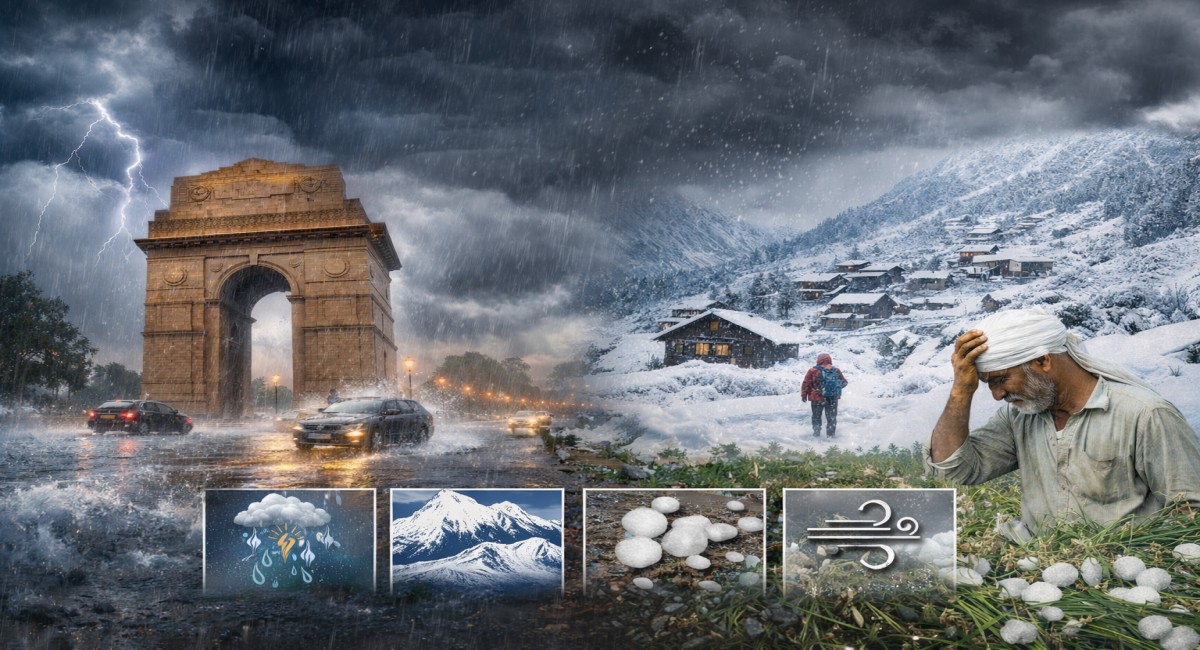
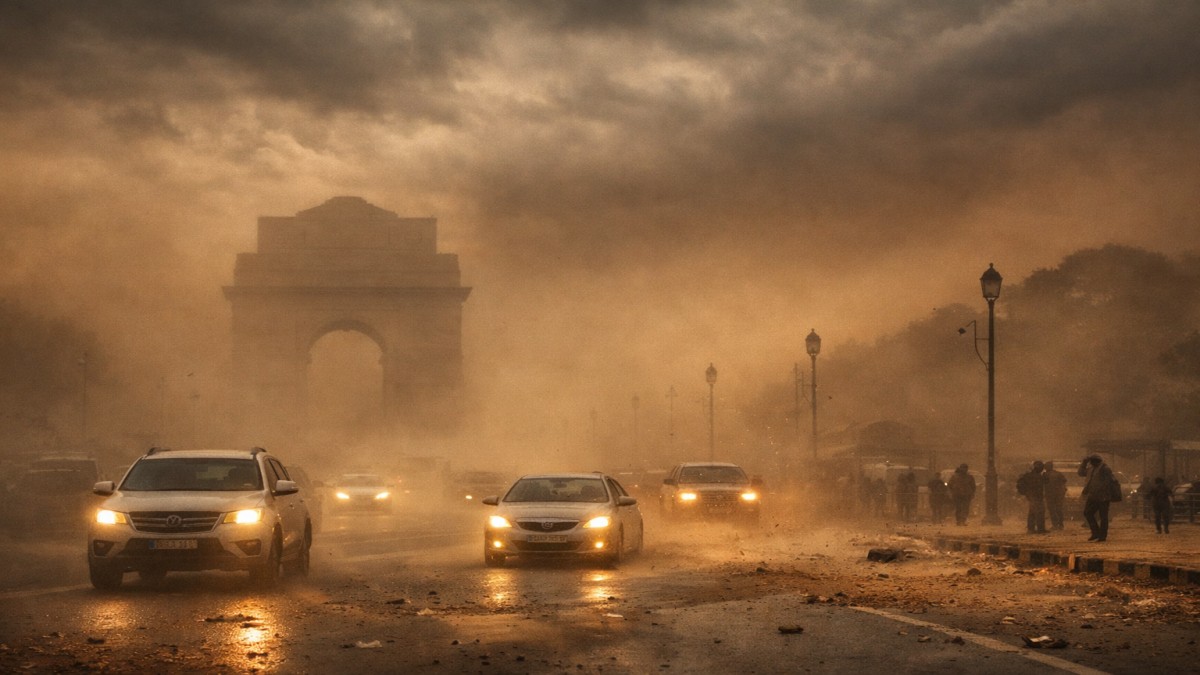
A dramatic weather event swept across Delhi-NCR on Friday, leaving the region shrouded in a dense veil of dust and haze. What began as a seemingly normal warm April morning quickly turned into a scene of reduced visibility, muted sunlight, and powerful gusty winds. According to the India Meteorological Department, the primary driver behind this sudden transformation was the arrival of not one, but two active Western Disturbances interacting with existing heat conditions over northern India.
A Clash of Air Masses
Western Disturbances are large-scale weather systems that originate over the Mediterranean region and travel eastward across Europe and Central Asia before reaching the Indian subcontinent. These systems carry cold, moisture-laden air. When they encounter the hot and dry conditions prevalent over northwestern India during pre-monsoon months, the result can be highly unstable atmospheric conditions.
In this case, the collision between cold, moist winds from the west and hot, dry winds over land created a sharp pressure gradient. This instability intensified wind speeds to 40–60 km/h, particularly across Delhi, Haryana, Punjab, and Rajasthan. The winds, predominantly from the west and northwest, acted as carriers of vast amounts of loose desert dust.
Dust from the Thar Reaches the Capital
The primary source of this dust was the Thar Desert in Rajasthan, along with arid regions in Pakistan, including Balochistan. With surface temperatures already elevated—ranging between 35°C and 37°C—the ground had become extremely dry and loose, making it easier for strong winds to lift fine particles into the atmosphere.
As these dust-laden winds surged toward Delhi-NCR, they carried millions of microscopic particles that remained suspended in the lower atmosphere. The result was a dramatic drop in air quality and visibility, turning the sky a dull brownish-grey and obscuring the sun for hours.
Why the Haze Was So Dense
Unlike typical urban smog caused by pollution, this haze was primarily composed of natural dust particles. According to IMD scientists, the fine size and lightweight nature of these particles allowed them to remain suspended in the air even after wind speeds decreased.
Additionally, the presence of slight moisture brought in by the Western Disturbances contributed to the formation of a thicker haze layer. This combination of dust and humidity intensified the opacity of the atmosphere, especially during early morning and late evening hours. As a result, visibility dropped significantly, affecting road traffic and daily activities.
Residents also reported mild breathing discomfort, a common effect when fine dust particles linger in the air. However, experts clarified that this event was largely natural and not directly linked to anthropogenic pollution sources.
Sudden Weather Flip: From Heat to Storm
The intensity of this weather event can be traced back to the unusual heat conditions preceding it. March and early April 2026 had already witnessed above-normal temperatures across Delhi-NCR. This excessive heating led to the formation of a low-pressure zone near the surface.
When the cooler Western Disturbance system moved in, it disrupted this balance. The cold air descending into a warm environment triggered convection, resulting in strong winds, dust storms, and eventually cloud formation. In some areas, this even led to thunderstorms accompanied by lightning and light rainfall.
Meteorologists describe this as a classic pre-monsoon pattern, where rapid heating of land surfaces creates instability that is later amplified by incoming weather systems. However, what made this event notable was its intensity and suddenness.
Climate Change Factor
Experts believe that climate change is playing a growing role in such extreme and erratic weather events. Rising global temperatures are causing earlier and more intense heating during the spring season in northern India. This accelerates the formation of low-pressure zones and increases atmospheric instability.
Additionally, environmental degradation and desertification in regions like Rajasthan are making it easier for dust to be lifted into the air. The drying of land surfaces reduces vegetation cover, leaving soil exposed and vulnerable to wind erosion.
Scientists have also observed changes in the behavior of Western Disturbances. These systems are now arriving with greater frequency and intensity, likely influenced by shifts in global atmospheric circulation patterns.
Alerts and What Lies Ahead
The India Meteorological Department had issued a yellow alert for Delhi-NCR on April 4, warning of continued strong winds, dust storms, lightning, and light rainfall. While the immediate impact is expected to subside gradually, the broader pattern suggests that such events may become more frequent in the coming years.
In the short term, weather conditions are likely to stabilize after this disturbance passes. However, temperatures are expected to rise again, potentially setting the stage for further instability later in the pre-monsoon season.
A Reminder of Nature’s Power
This dust storm serves as a stark reminder of how interconnected atmospheric systems can produce rapid and sometimes disruptive changes. Within hours, a clear sky turned into a hazy expanse, affecting millions of residents across one of India’s most densely populated regions.
While such events are not entirely new, their increasing intensity underscores the need for better preparedness, real-time forecasting, and public awareness. As climate dynamics continue to evolve, understanding these patterns becomes crucial—not just for meteorologists, but for everyone living in vulnerable regions.
Disclaimer: This article is based on meteorological data and expert explanations available at the time of writing. Weather patterns are subject to change, and readers are advised to follow official updates from IMD and local authorities for real-time information.