Western Disturbance Looms Over North India: Heavy Rain, Snowfall, and Hailstorm Alert in Early April 2026
North India is set to witness another significant shift in weather patterns as a strong Western Disturbance becomes active during the first week of April 2026. According to the India Meteorological Department (IMD), this system is expected to bring widespread rainfall, snowfall in higher altitudes, thunderstorms, hailstorms, and gusty winds across multiple states between April 3 and April 5.
A Fresh Weather Turn in North India
After a fluctuating March marked by repeated weather disturbances, April is beginning on a similar note. The IMD has forecast that the approaching Western Disturbance will once again influence weather conditions across northern and central India. This atmospheric system, originating from the Mediterranean region, carries moisture and plays a crucial role in shaping winter and early summer weather in India.
Its impact is expected to be visible starting this weekend, with rain and thunderstorm activities likely to begin as early as Saturday and Sunday across the northern plains. The progression of the system will intensify over the next few days, leading to more widespread and potentially disruptive weather events.
Regions Likely to Be Affected
The IMD has identified several states that will bear the brunt of this weather system. These include Gujarat, Rajasthan, Punjab, Haryana, Madhya Pradesh, Himachal Pradesh, and parts of Uttar Pradesh and Delhi-NCR.
On April 3, rainfall accompanied by thunder and lightning is likely to occur in parts of Gujarat and western as well as southeastern Rajasthan. As the system advances, the intensity of precipitation is expected to increase, especially over the western Himalayan region between April 3 and April 5.
States such as Punjab, Haryana, Rajasthan, and Madhya Pradesh may experience rain, thunderstorms, and isolated hailstorms on April 3 and 4. Meanwhile, regions like Delhi-NCR and western Uttar Pradesh could also witness sudden weather changes, including strong winds and localized storms.
Snowfall in the Himalayas
The western Himalayan region is expected to see significant weather activity during this period. Himachal Pradesh and higher-altitude areas of Jammu & Kashmir and Uttarakhand are likely to experience light to moderate snowfall. This snowfall, while beneficial for maintaining water reserves and glacier health, may also disrupt travel and daily life in mountainous regions.
The combination of snowfall at higher elevations and rainfall in lower areas highlights the widespread influence of the Western Disturbance across varying terrains.
Strong Winds and Thunderstorm Activity
One of the most concerning aspects of this weather system is the potential for strong winds. The IMD has warned that wind speeds could reach up to 50–60 km/h in several regions. These gusty winds, combined with thunderstorms and lightning, could lead to damage to infrastructure, uprooting of trees, and disruptions in power supply.
Hailstorms are also likely in isolated areas, particularly in parts of Rajasthan, Haryana, and Madhya Pradesh. These events are often sudden and can cause significant damage within a short period.
Impact on Agriculture: A Double-Edged Sword
The timing of this weather system is crucial, especially for farmers. While rainfall can be beneficial by increasing soil moisture and supporting late-stage crop growth, the current phase of the agricultural cycle presents certain risks.
Rabi crops such as wheat, mustard, and pulses are nearing maturity and are ready for harvest in many regions. Heavy rainfall, hailstorms, and strong winds during this stage can lead to crop lodging (falling over), grain damage, and reduced yield quality.
Farmers may face financial losses if these adverse conditions persist. At the same time, moderate rainfall without extreme events could still provide some benefits by maintaining soil health and reducing irrigation needs.
A Pattern Seen in March Continues
March 2026 saw multiple instances of weather disturbances affecting North India, leading to unseasonal rainfall and fluctuating temperatures. According to meteorological experts, this pattern is likely to continue into early April, with repeated activation of Western Disturbances.
This trend has delayed the onset of extreme heat conditions that are typically expected during this time of year. As a result, residents in many northern regions have experienced relatively milder temperatures compared to usual early summer conditions.
Relief from Heatwave Conditions
One positive outcome of these recurring weather systems is the temporary relief from heatwaves. April is generally the beginning of rising temperatures across India, often leading to intense heat in northern and central regions.
However, due to the active Western Disturbances, the IMD expects that severe heatwave conditions may remain subdued during the initial phase of April. Cloud cover, rainfall, and cooler winds will help maintain moderate temperatures, offering some respite to residents.
Preparedness and Advisory
Given the potential severity of the weather events, authorities and residents are advised to remain cautious. People living in affected areas should keep track of local weather updates and advisories issued by the IMD.
Farmers are encouraged to take preventive measures, such as securing crops and delaying harvest where possible. Travelers in hilly regions should remain alert due to the possibility of snowfall and slippery roads.
Urban areas, particularly in Delhi-NCR and nearby regions, may experience traffic disruptions and waterlogging due to sudden heavy showers. Power outages and infrastructure damage are also possible in areas experiencing strong winds.
Conclusion
The first week of April 2026 is shaping up to be meteorologically active for North India. The arrival of a strong Western Disturbance is expected to bring a mix of beneficial rainfall and potentially damaging weather events, including thunderstorms, hailstorms, and snowfall.
While the system may offer temporary relief from rising temperatures, it also poses risks to agriculture, infrastructure, and daily life. As weather patterns continue to evolve, staying informed and prepared will be key to minimizing the impact of these natural events.
With climate variability becoming increasingly evident, such unpredictable weather shifts highlight the importance of accurate forecasting and timely preparedness in safeguarding both livelihoods and infrastructure.
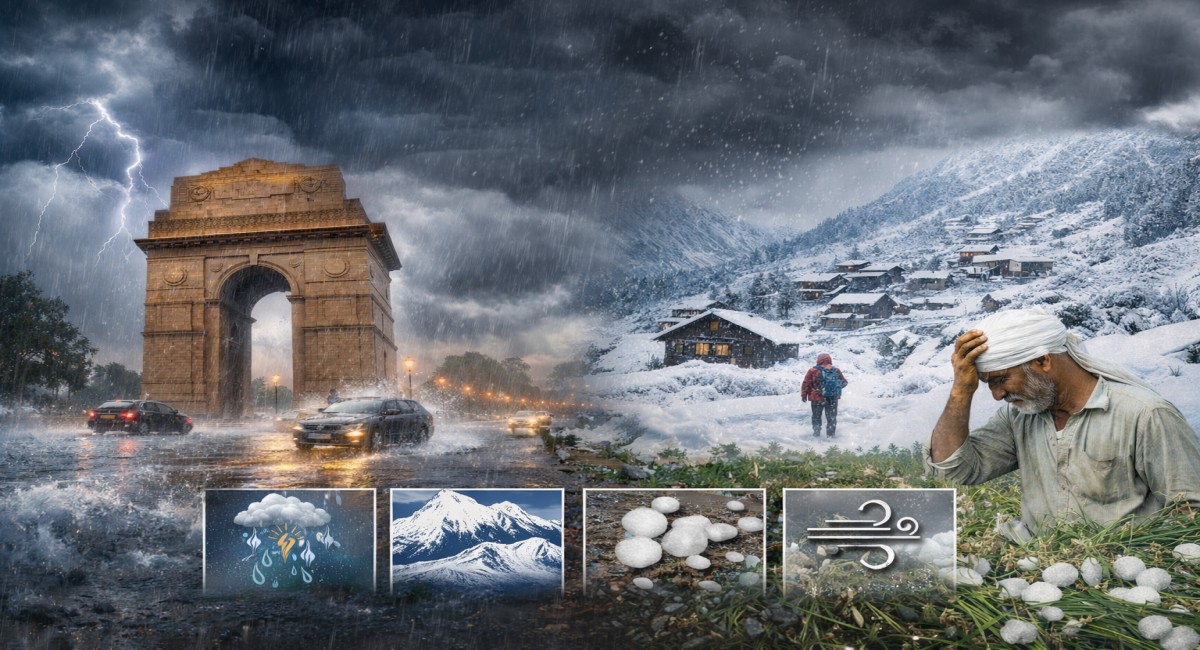
Image generates by AI tool
Disclaimer:
This article is based on forecasts and data provided by the India Meteorological Department (IMD) and meteorological experts. Weather conditions may change rapidly, and readers are advised to follow official updates and local authorities for the latest information and safety guidelines.