The Life, Legacy, and Leadership of Chandrikapersad Santokhi: A Statesman Who Shaped Modern Suriname
The passing of Chandrikapersad Santokhi at the age of 67 marks the end of a significant chapter in the political and institutional history of Suriname. Known affectionately as “Chan,” Santokhi was not just a politician but a symbol of resilience, reform, and justice in a nation that has long grappled with political instability and economic challenges.
From his early days as a police commissioner to his tenure as President from 2020 to 2025, Santokhi’s journey was defined by discipline, courage, and a relentless pursuit of accountability. His death has sparked tributes from leaders across the world, including Jennifer Geerlings-Simons and Rob Jetten, both of whom acknowledged his enduring contributions to Suriname and beyond.
Early Life and Rise Through Law Enforcement
Before entering politics, Santokhi built a formidable reputation in law enforcement. As a police commissioner, he was widely respected for his integrity and professionalism. His work in tackling organized crime and drug trafficking earned him the nickname “The Sheriff,” a title that reflected both his tough stance on crime and his commitment to justice.
One of the most defining moments of his early career was his role in investigating the infamous December killings of 1982, a dark chapter in Suriname’s history. During this period, 15 political opponents of the military regime were executed, and that deeply scarred the nation’s collective memory.
Santokhi’s decision to pursue the investigation was both courageous and controversial. It placed him in direct opposition to powerful political figures, most notably Desi Bouterse, who led the military regime at the time.
The December Killings Investigation: A Fight for Justice
The investigation into the December killings was not just a legal process—it was a moral battle. Santokhi’s role in leading the inquiry demonstrated his unwavering commitment to justice, even when it meant confronting entrenched power structures.
Desi Bouterse, who later became President, consistently denied direct involvement in the killings, although he accepted “political responsibility.” The trial, which began in 2007—25 years after the घटना—was one of the longest and most complex in Suriname’s history.
Eventually, Bouterse was convicted and sentenced to 20 years in prison. However, he remained a fugitive until his death in 2024. The prolonged legal battle underscored the deep divisions within Surinamese society and highlighted Santokhi’s role as a figure willing to challenge impunity.
This episode cemented Santokhi’s image as a defender of democratic values and the rule of law.
Transition into Politics
Santokhi’s success in law enforcement naturally paved the way for a political career. He served as Minister of Justice and Police from 2005 to 2010, where he continued his crackdown on crime and corruption.
During this time, he implemented reforms aimed at strengthening the justice system, improving law enforcement capabilities, and restoring public trust in state institutions. His tenure was marked by a no-nonsense approach, which earned both praise and criticism.
In 2011, Santokhi became the chairman of the Progressive Reform Party, following the resignation of Ramdien Sardjoe. Under his leadership, the party evolved into a major political force in Suriname.
Presidency (2020–2025): Leading a Nation in Crisis
Santokhi’s election as President in 2020 came at a critical juncture for Suriname. The country was facing severe economic crisis, characterized by high debt, inflation, and dwindling public finances.
He succeeded Desi Bouterse, inheriting what many described as a bankrupt economy. The challenges were immense, and expectations were high.
Economic Reforms and IMF Program
To stabilize the economy, Santokhi’s administration turned to the International Monetary Fund (IMF). The resulting program aimed to restore fiscal discipline, reduce debt, and promote sustainable growth.
However, these reforms came at a significant cost. Measures included:
- Removal of fuel subsidies
- Reduction in electricity and water subsidies
- Fiscal austerity policies
While these steps were necessary for long-term stability, they placed a heavy burden on ordinary citizens.
Public Backlash and Protests
In February 2023, widespread frustration with rising living costs culminated in protests. Hundreds of demonstrators stormed Suriname’s Parliament, demanding Santokhi’s resignation.
The protests highlighted the balance between economic reform and social stability. While Santokhi was praised internationally for his efforts to stabilize the economy, domestically, many citizens struggled with the immediate impact of austerity measures.
This period was one of the most challenging phases of his presidency, testing his leadership and resilience.
Foreign Relations and International Recognition
Santokhi also focused on strengthening Suriname’s international relationships, particularly with the Netherlands, its former colonial ruler.
Rob Jetten acknowledged Santokhi’s efforts in improving bilateral ties, emphasizing his role in fostering cooperation and mutual understanding.
Under Santokhi, Suriname sought to reposition itself on the global stage, attracting investment and rebuilding trust with international partners.
Electoral Defeat in 2025
Despite his efforts to stabilize the economy, Santokhi faced a significant political setback in the 2025 general elections. Voters, frustrated by economic hardships, denied him a second term.
The election outcome reflected the reality of governance—where long-term reforms often clash with short-term public expectations.
Nevertheless, Santokhi accepted the results gracefully, reinforcing his commitment to democratic principles.
Legacy as “The Sheriff”
Santokhi’s nickname, “The Sheriff,” encapsulates his legacy. It symbolizes his dedication to law and order, his courage in confronting injustice, and his unwavering commitment to public service.
From investigating one of the darkest in Suriname’s history to leading the nation through economic संकट, Santokhi remained steadfast in his principles.
Tributes and Global Reactions
Following his death, tributes poured in from across the world.
Jennifer Geerlings-Simons described him as a leader whose “years of service in various public functions will be remembered.”
Similarly, Rob Jetten expressed shock and grief, highlighting Santokhi’s contributions to both Suriname and international diplomacy.
These tributes reflect the respect and admiration he commanded on the global stage.
A Complex Yet Inspiring Legacy
Santokhi’s life was not without controversy. His economic policies faced criticism, and his presidency was marked by social unrest. However, his willingness to take difficult decisions for the greater good cannot be overlooked.
He was a leader who understood that true progress often requires sacrifice—a philosophy that defined his approach to governance.
Impact on Suriname’s Political Landscape
Santokhi’s influence on Suriname’s political landscape is profound. He:
- Strengthened democratic institutions
- Promoted accountability and transparency
- Challenged political impunity
- Advocated for economic reform
His legacy will continue to shape the country’s political discourse for years to come.
Conclusion: Remembering Chandrikapersad Santokhi
The story of Chandrikapersad Santokhi is one of determination, courage, and service. From a police commissioner investigating political killings to a president navigating economic संकट, his journey reflects the complexities of leadership in a developing nation.
While opinions about his policies may differ, there is little doubt that Santokhi left an indelible mark on Suriname.
His life serves as a reminder that leadership is not about popularity but about responsibility—about making difficult choices in the face of adversity.
As Suriname moves forward, it does so with the legacy of a leader who dared to confront the past, stabilize the present, and shape the future.
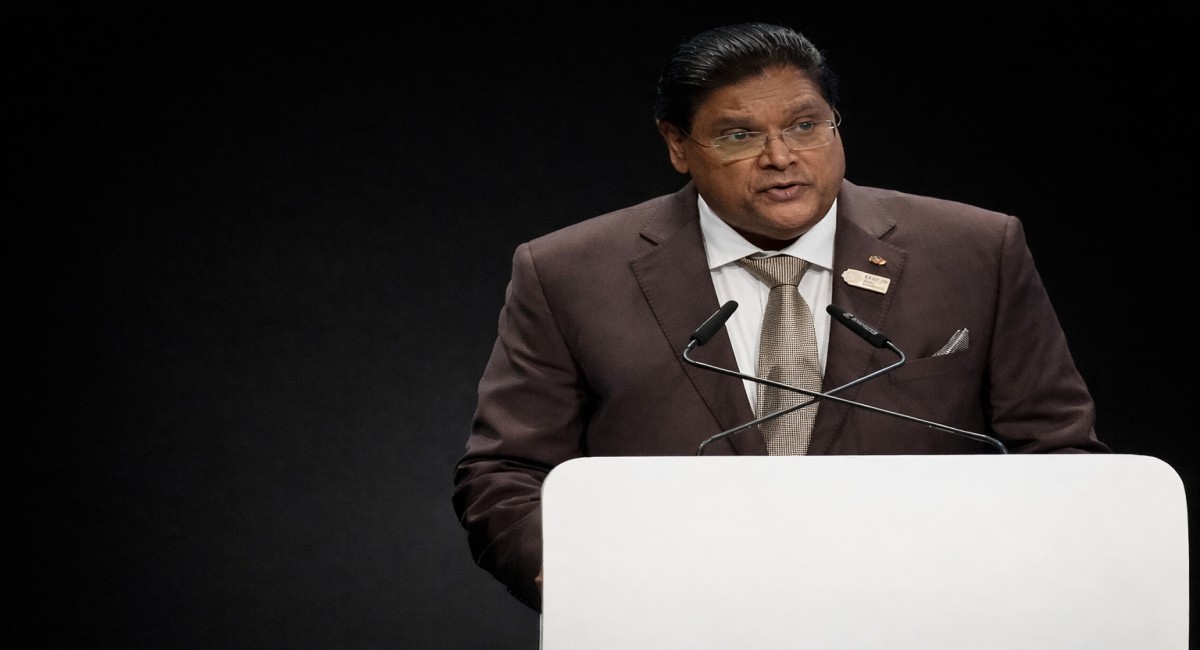
Image Credit: AI-generated image inspired by public appearances of Chandrikapersad Santokhi. Created for illustrative purposes only.
Disclaimer
The information provided in this article is for general informational and educational purposes only. While every effort has been made to ensure accuracy and authenticity, the content is based on publicly available sources, reports, and historical data.
This article does not intend to harm, defame, or misrepresent any individual, organization, or entity, including Chandrikapersad Santokhi or any associated persons. All opinions expressed are for informational purposes and should not be considered as professional, legal, or political advice.
Readers are encouraged to verify information independently and refer to official sources for the most accurate and updated details. The author and publisher are not responsible for any errors, omissions, or outcomes resulting from the use of this information.