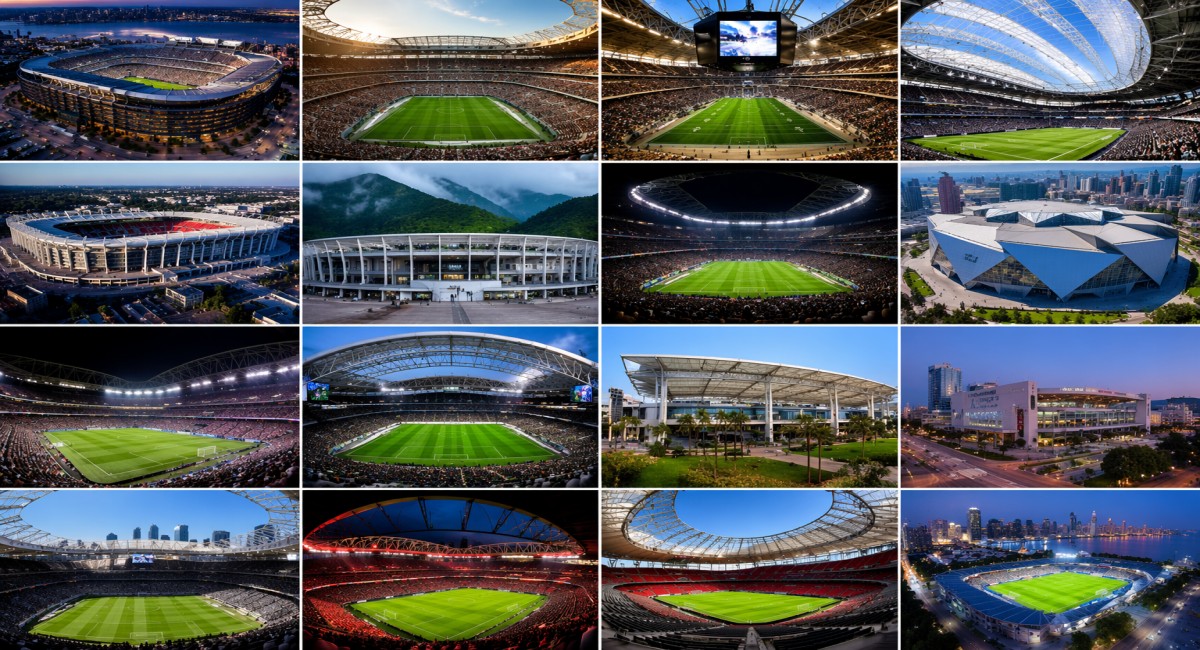
2026 FIFA World Cup Stadiums Ranked by Capacity: A New Era of Scale, Innovation, and Global Football Identity
The upcoming 2026 FIFA World Cup is not just another edition of the world’s most celebrated sporting event—it represents a historic transformation in how global football is staged, experienced, and remembered. For the first time ever, the tournament will be jointly hosted by three nations—the United States, Mexico, and Canada—marking a monumental shift in both scale and logistical ambition.
At the heart of this transformation lies a carefully curated selection of stadiums, each chosen not only for its size but also for its technological sophistication, cultural relevance, and ability to deliver a world-class fan experience. When these venues are ranked by capacity, a fascinating narrative unfolds—one that highlights FIFA’s strategic focus on maximizing attendance while ensuring quality, atmosphere, and accessibility.
This article provides an in-depth, analytical look at all 16 stadiums set to host matches during the tournament, exploring how each contributes to what is expected to be the most expansive and commercially impactful World Cup in history.
The Evolution of World Cup Infrastructure
The decision to expand the World Cup to 48 teams has significantly increased the number of matches and, consequently, the demand for larger and more versatile venues. FIFA’s selection process reflects a modern understanding of sports infrastructure—one that goes beyond sheer capacity to include sustainability, fan engagement, and technological integration.
Unlike previous tournaments that were confined to a single country, the 2026 edition embraces a continental model. This ensures broader participation, diverse fan experiences, and an unparalleled celebration of football culture across North America.
1. MetLife Stadium (New York/New Jersey) – 78,576
Topping the list is MetLife Stadium, the largest venue of the tournament and a symbol of modern American sports infrastructure. Located in East Rutherford, New Jersey, this stadium is expected to host some of the most significant matches, potentially including the final.
Its design prioritizes crowd management, accessibility, and safety—critical factors when accommodating nearly 80,000 spectators. The stadium’s proximity to New York City adds a global dimension, ensuring massive international attention.
MetLife is not just a venue; it is a logistical powerhouse capable of handling high-profile global events with precision and efficiency.
2. Estadio Azteca (Mexico City) – 72,766
Few stadiums in the world carry the historical weight of Estadio Azteca. Having hosted two previous World Cup finals (1970 and 1986), it stands as a living monument to football history.
In 2026, it will achieve an unprecedented milestone by becoming the first stadium to host World Cup matches across three different tournaments. Its high-altitude location and passionate crowd create one of the most intimidating atmospheres in global football.
Modern renovations ensure that while its legacy remains intact, it meets the highest contemporary standards.
3. AT&T Stadium (Dallas) – 70,122
AT&T Stadium is widely regarded as one of the most technologically advanced sports venues in the world. Its retractable roof and massive center-hung video board redefine the spectator experience.
The stadium’s versatility allows it to seamlessly transition between American football and soccer configurations. Its seating design ensures excellent visibility, even at full capacity.
This venue reflects Texas’s larger-than-life sports culture and will undoubtedly host high-stakes matches.
4. SoFi Stadium (Los Angeles) – 69,650
SoFi Stadium represents the cutting edge of stadium design. Its translucent canopy creates a unique indoor-outdoor environment, enhancing both aesthetics and comfort.
Located in Inglewood, California, it serves as a hub for entertainment and global sporting events. Advanced digital systems provide fans with immersive experiences, from real-time analytics to enhanced viewing angles.
It is not just a stadium—it is a futuristic arena built for the next generation of sports.
5. Levi’s Stadium (San Francisco Bay Area) – 69,391
Levi’s Stadium stands out for its commitment to sustainability and innovation. Equipped with solar panels and water conservation systems, it reflects a forward-thinking approach to infrastructure.
Located in Silicon Valley, it symbolizes the intersection of technology and sport. The stadium has already proven its capabilities by hosting major global events, including the Super Bowl.
Its inclusion in the World Cup underscores FIFA’s emphasis on environmentally responsible venues.
6. NRG Stadium (Houston) – 68,311
NRG Stadium’s retractable roof ensures optimal playing conditions regardless of weather—a crucial factor in a tournament spanning multiple climates.
Its flexible design allows it to adapt easily to soccer-specific requirements. Houston’s central location makes it a key travel hub, enhancing accessibility for fans from across the continent.
The stadium’s proven track record in hosting international matches makes it a reliable choice.
7. Arrowhead Stadium (Kansas City) – 67,513
Arrowhead Stadium is legendary for its electrifying atmosphere. Known for holding records for crowd noise, it creates an intense environment that can influence the outcome of matches.
While traditionally associated with American football, it has embraced soccer with increasing enthusiasm. Its acoustics amplify fan energy, making it one of the most intimidating venues for visiting teams.
8. Mercedes-Benz Stadium (Atlanta) – 67,382
Mercedes-Benz Stadium is a marvel of engineering, featuring a retractable roof that opens like a camera aperture. Its modern design is complemented by fan-friendly amenities, including wide concourses and diverse food options.
Located in downtown Atlanta, it offers excellent accessibility and urban integration. The stadium has quickly established itself as a premier destination for major sporting events.
9. Lincoln Financial Field (Philadelphia) – 65,827
This stadium strikes a balance between tradition and modernity. Its design brings fans closer to the action, creating an intimate yet energetic atmosphere.
Philadelphia’s passionate sports culture ensures vibrant crowds, adding to the overall experience. The venue has hosted numerous international matches, solidifying its reputation.
10. Lumen Field (Seattle) – 65,123
Lumen Field is widely regarded as one of the most soccer-friendly stadiums in the United States. Its steep seating design traps sound, creating an immersive environment.
Seattle’s strong soccer culture translates into unmatched fan support, making it an ideal World Cup venue.
11. Hard Rock Stadium (Miami) – 64,091
Hard Rock Stadium combines modern functionality with a vibrant, tropical aesthetic. Recent renovations, including a canopy for shade, enhance comfort while maintaining an open-air feel.
Miami’s multicultural identity adds a unique flavor to the tournament, attracting fans from around the world.
12. Gillette Stadium (Boston) – 63,815
Gillette Stadium is known for its disciplined organization and operational efficiency. Its traditional design is complemented by modern amenities, making it well-suited for large-scale events.
The venue’s adaptability has been proven through numerous international matches.
13. Estadio BBVA (Monterrey) – 50,113
Estadio BBVA is one of Mexico’s most visually stunning stadiums, framed by mountainous landscapes. Its modern design enhances fan engagement, creating a lively atmosphere.
The stadium represents the new generation of football infrastructure in Latin America.
14. BC Place (Vancouver) – 48,821
BC Place features a retractable roof and a distinctive cable-supported design. Located in downtown Vancouver, it offers scenic surroundings and excellent connectivity.
Its indoor capability ensures consistent playing conditions regardless of weather.
15. Estadio Akron (Guadalajara) – 44,330
Estadio Akron is known for its sleek architecture and vibrant atmosphere. Its design focuses on spectator comfort and natural lighting.
Located in a football-rich city, it adds cultural depth to the tournament.
16. BMO Field (Toronto) – 44,315
BMO Field may be the smallest venue, but it offers one of the most intimate fan experiences. Recent expansions ensure it meets FIFA standards.
Its waterfront location provides a unique backdrop, enhancing its appeal.
Strategic Importance of Stadium Capacity
Capacity is more than just a number—it is a reflection of FIFA’s broader ambitions. Larger venues allow for greater ticket sales, increased revenue, and wider global participation.
However, FIFA has carefully balanced size with atmosphere. Even smaller stadiums like BMO Field play a crucial role in maintaining diversity and accessibility.
A Continental Celebration of Football
The geographic distribution of these stadiums ensures that the World Cup truly feels continental. From the bustling streets of New York to the historic charm of Mexico City and the scenic beauty of Vancouver, each location contributes its own identity.
This diversity enhances the fan experience, turning the tournament into a cultural journey as much as a sporting event.
Technology and Innovation
Modern stadiums are no longer just venues—they are technological ecosystems. Features such as:
- Retractable roofs
- Advanced pitch systems
- High-speed connectivity
- Immersive digital displays
…all contribute to a next-level spectator experience.
Venues like SoFi Stadium and AT&T Stadium set new benchmarks in this regard.
Sustainability and Future Readiness
Sustainability is a key focus for the 2026 World Cup. Stadiums like Levi’s Stadium lead the way with eco-friendly designs, including renewable energy systems and water conservation initiatives.
This reflects a broader shift toward responsible infrastructure in global sports.
The stadiums of the 2026 FIFA World Cup represent a perfect blend of size, innovation, and cultural significance. From the historic legacy of Estadio Azteca to the futuristic brilliance of SoFi Stadium, each venue plays a vital role in shaping the tournament.
Together, they form the backbone of what promises to be the most ambitious and widely attended World Cup in history. As fans from across the globe prepare to converge on North America, these stadiums will not just host matches—they will create memories that define a generation of football.