FIFA World Cup 2026: A Tournament of Promise, Pressure, and Global Debate
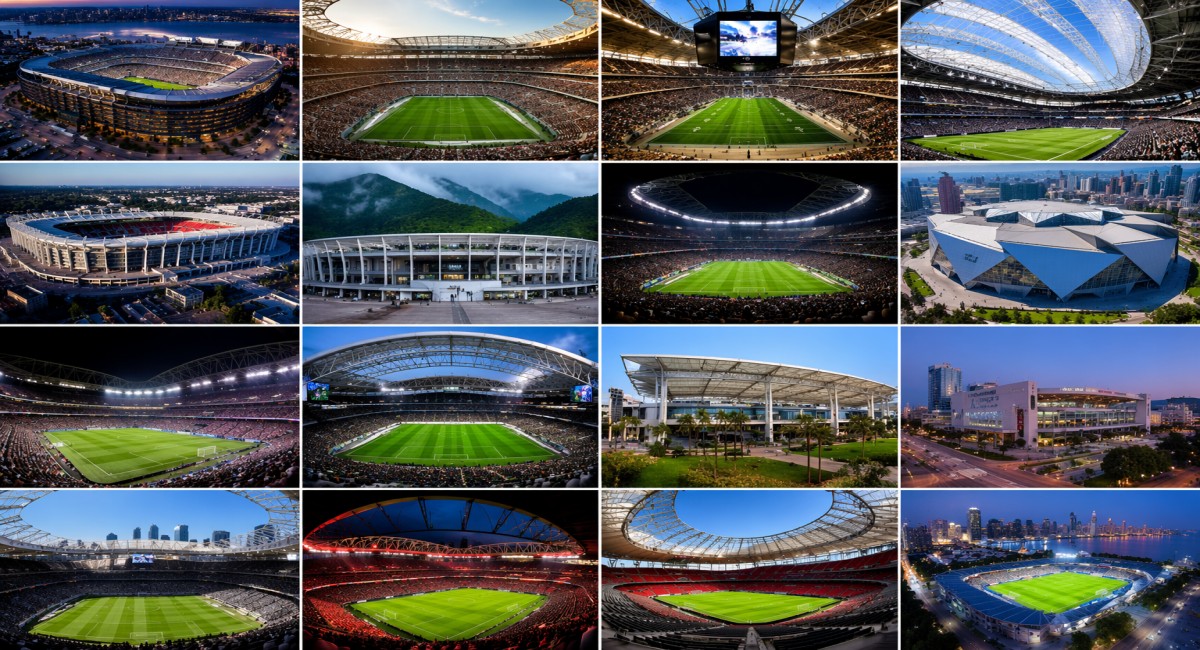
The countdown to the FIFA World Cup 2026 has begun, and anticipation is building across continents. Scheduled to be hosted across the United States, Canada, and Mexico, this edition of the tournament is set to be the largest in history, featuring 48 teams and 16 host cities. Yet, behind the excitement lies a complex narrative—one shaped by rising travel costs, safety concerns, geopolitical anxieties, and evolving team dynamics, especially among African nations preparing for football’s biggest stage.
This World Cup is not just about football; it is about accessibility, global perception, and the shifting landscape of international sport.
Rising Concerns Among Global Fans
Despite the prestige associated with the World Cup, recent survey data suggests a surprising trend: enthusiasm among international fans is not as high as expected. According to research conducted by Upgraded Points, nearly half (49%) of surveyed football fans from 22 countries reported feeling less excited about the tournament being hosted in the United States.
Even more striking, 37% of respondents stated they would be less likely to attend matches in the U.S. compared to other host nations. This signals a notable shift in fan sentiment, particularly for an event that traditionally attracts massive international travel.
Why the hesitation?
Several factors are influencing this outlook:
- Safety concerns: 59% of fans expressed feeling unsafe traveling to the U.S. for a major sporting event, while 27% said they would feel “very unsafe.”
- Immigration worries: 66% reported hesitation due to recent immigration-related developments.
- Border control anxiety: 33% of respondents were extremely concerned about potential issues at entry points.
- Political climate: 55% cited unrest and political tensions as a deterrent.
- Visa complications: 53% are worried about entry processes and delays.
- Anti-foreigner sentiment: 45% feel uneasy about possible discrimination.
These concerns highlight a critical challenge for organizers: ensuring that the World Cup remains a welcoming, inclusive, and secure event for fans worldwide.
The Cost Barrier: A Luxury Experience?
Attending a World Cup has always been expensive, but 2026 appears to be pushing the limits further. The study analyzed the average cost of attending a single match, factoring in airfare, accommodation, food, transport, and ticket prices.
Estimated Costs by U.S. Host Cities
- Boston – $8,929
- Philadelphia – $7,139
- Los Angeles – $5,630
- San Francisco – $5,624
- Houston – $5,383
- Atlanta – $5,268
- Dallas – $4,996
- Kansas City – $4,716
- Seattle – $3,260
- New York – $3,082
- Miami – $2,614
The difference between the most and least expensive cities is staggering, with Boston costing more than three times Miami. For international fans, especially from developing countries, these prices create a significant barrier.
Keri Stooksbury, editor-in-chief at Upgraded Points, emphasized that while the tournament is historic, it comes at a “premium price tag” that many fans simply cannot afford.
Key Cost Drivers
- Rising airfare due to fuel costs
- Expensive short-term rentals (Airbnb surge pricing)
- High resale ticket prices
- Urban transport and food costs in major U.S. cities
For many, attending the World Cup may remain a dream rather than reality.
Logistical and Cultural Challenges
Hosting a World Cup across three countries is an ambitious undertaking. While it promises diversity and scale, it also introduces logistical complexities.
Travel Between Cities
Unlike previous tournaments hosted within smaller geographic areas, the 2026 edition spans vast distances. Traveling from cities like Los Angeles to New York involves cross-country flights, adding time and expense.
Cultural Adaptation
For international fans, adapting to different systems—transport, tipping culture, healthcare access, and legal norms—can be overwhelming. Combined with language barriers and unfamiliar environments, this adds another layer of stress.
African Teams: A New Wave of Talent
While fans grapple with travel concerns, African national teams are quietly undergoing transformation. The March international break served as a crucial window for coaches to test new players, finalize squads, and secure nationality switches.
This strategic reshaping could significantly impact the tournament.
Morocco: Strengthening the Backbone
Morocco national football team have made a major defensive upgrade by securing the commitment of centre-back Issa Diop.
Born in France to a Moroccan mother and Senegalese father, Diop had long been courted by multiple nations. His decision to represent Morocco adds تجربه and stability to a previously vulnerable defensive line.
- Nearly 8 years of Premier League experience
- Strong aerial presence and tactical awareness
- Immediate impact in friendlies against Ecuador and Paraguay
With players like Yassine Bounou in goal and Nayef Aguerd in defense, Morocco now boasts one of the most balanced defensive units heading into the World Cup.
Senegal: Youth and Uncertainty
Senegal national football team may have missed out on Diop, but they introduced promising talents:
- Nobel Mendy: A young defender who chose Senegal over Guinea-Bissau but suffered an injury on debut.
- Mamadou Diakhon: A winger in excellent form in Belgium, showing potential to become a key squad member.
Despite setbacks, Senegal continues to build depth, with coach Pape Thiaw exploring new options ahead of squad selection.
Ivory Coast: Attacking Reinforcements
Ivory Coast national football team secured a major boost with the addition of Elye Wahi.
- Former France youth international
- Scored 19 Ligue 1 goals in 2022–23
- Brings pace, finishing, and versatility
Although he struggled in Germany, his recent form suggests a resurgence. Combined with an already strong attacking lineup, Ivory Coast could be one of Africa’s surprise packages.
Egypt: Planning for the Future
Egypt national football team introduced Haissem Hassan, a Paris-born winger with dual heritage.
His inclusion signals a long-term transition, especially as the team prepares for life beyond Mohamed Salah. Hassan’s ability to cut inside and create chances adds a new dimension to Egypt’s attack.
Ghana: A Team in Transition
Ghana national football team are undergoing significant changes:
- Multiple debutants introduced
- Coaching uncertainty following recent defeats
- Mixed performances from new players
While talents like Derrick Luckassen and Patric Pfeiffer show promise, the team lacks cohesion heading into the tournament.
الجزائر (Algeria): Fresh Energy
Algeria national football team experimented with several new players:
- Fares Ghedjemis impressed with a goal on debut
- Multiple young players integrated into the squad
- Adil Aouchiche’s switch from France adds creativity
This infusion of youth could redefine Algeria’s playing style.
Tunisia: Experience Meets Stability
Tunisia national football team welcomed Rani Khedira, a seasoned midfielder with German football experience.
His leadership and tactical intelligence could help stabilize a team recovering from a disappointing AFCON campaign.
Smaller Nations Making Bold Moves
Teams like Cape Verde and DR Congo are also leveraging diaspora talent:
- Cape Verde introduced five new players from multiple countries
- DR Congo considered Jeremy Ngakia before injury ruled him out
These strategies reflect a broader trend: globalization of football talent and identity.
The Bigger Picture: A World Cup at a Crossroads
The 2026 tournament represents a turning point for global football. On one hand, it promises:
- Record participation (48 teams)
- Massive commercial success
- Expanded global reach
On the other hand, it raises critical questions:
- Is the World Cup becoming too expensive for fans?
- Can host nations ensure safety and inclusivity?
- Will logistical challenges overshadow the spectacle?
The FIFA World Cup 2026 is shaping up to be one of the most ambitious and debated tournaments in history. While the expansion to 48 teams and multi-country hosting model reflects football’s growing global footprint, it also introduces new challenges that cannot be ignored.
From rising travel costs and safety concerns to evolving team dynamics—especially among African nations—the road to 2026 is as complex as it is exciting.
For fans, players, and organizers alike, the success of this World Cup will depend not just on what happens on the pitch, but on how well the game can remain accessible, inclusive, and truly global.
The world will be watching—but whether it will be watching from the stadiums or from afar remains an open question.