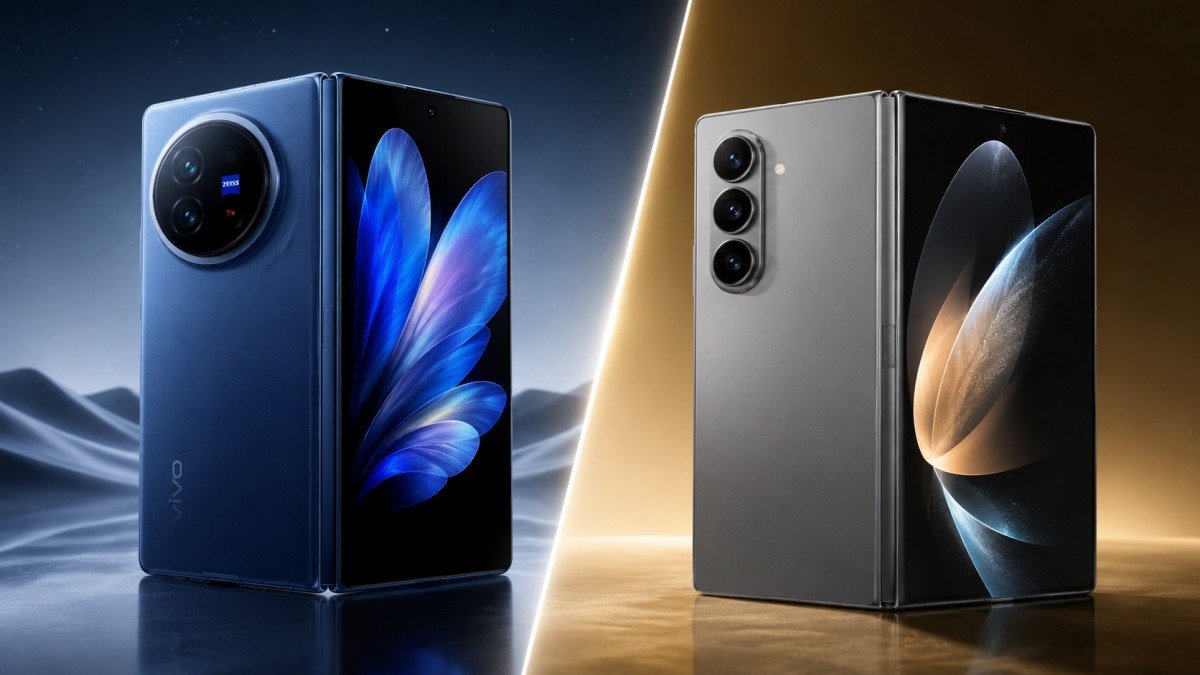
Vivo X Fold 6 Takes Aim at Samsung Galaxy Z Fold 8 With Bigger Battery and Camera Innovations
The premium foldable smartphone market is becoming more competitive than ever, and Samsung is no longer the only company setting the pace. While the Samsung Galaxy Z Fold 8 remains one of the most anticipated smartphone launches of the year, Vivo has entered the spotlight with the official announcement of the Vivo X Fold 6.
The new foldable arrives weeks before Samsung is expected to unveil its next-generation flagship, giving Vivo an opportunity to capture attention with hardware that focuses on two areas many users care about most—battery life and photography.
Although the Vivo X Fold 6 is unlikely to receive an official launch in the United States, the company has confirmed a global rollout, making the device available in several international markets across Europe and Asia. That alone signals Vivo’s growing ambition to challenge Samsung’s long-standing dominance in the foldable smartphone segment.
Vivo Is Expanding Its Foldable Presence
Samsung has led the foldable market for years with the Galaxy Z Fold series, but Chinese smartphone manufacturers have steadily closed the gap. Companies like Honor, Oppo, Huawei, and Vivo have focused on making thinner, lighter, and more feature-packed foldables.
With the launch of the Vivo X Fold 6, the company appears determined to compete directly with Samsung’s flagship lineup rather than simply offering an alternative.
The biggest talking points surrounding the device are its massive battery capacity and Vivo’s continued investment in smartphone photography.
Vivo X Fold 6 Packs a Massive 7,000mAh Battery
Battery capacity has become one of the most important factors for smartphone buyers, especially in premium foldable devices.
The Vivo X Fold 6 is confirmed to feature a 7,000mAh battery, making it one of the largest batteries ever fitted inside a book-style foldable smartphone.
That number immediately stands out when compared to Samsung’s current foldable lineup.
The Galaxy Z Fold 7 uses a dual-cell 4,400mAh battery, a capacity Samsung has largely maintained since the Galaxy Z Fold 2 generation.
The difference is significant.
A 7,000mAh battery offers roughly 59% more capacity than Samsung’s current foldable, suggesting the Vivo device could deliver substantially longer battery life during everyday use.
Why Bigger Batteries Matter on Foldables
Foldable smartphones naturally consume more power than traditional phones because they feature a much larger internal display.
Whether users are multitasking, watching videos, gaming, editing documents, or browsing multiple apps simultaneously, the expansive foldable screen requires more energy than a conventional smartphone display.
That makes battery life even more critical.
A larger battery helps users enjoy longer screen-on time without worrying about frequent charging, particularly during demanding tasks that take advantage of the foldable form factor.
For many buyers, battery endurance remains one of the deciding factors when choosing between premium smartphones.
Galaxy Z Fold 8 May Finally Receive a Battery Upgrade
Industry reports suggest Samsung could increase the Galaxy Z Fold 8 battery capacity to 5,000mAh.
If accurate, this would represent Samsung’s first major battery improvement for its foldable flagship in several years.
While a 5,000mAh battery would certainly be an improvement over the previous 4,400mAh unit, Samsung would still remain well behind Vivo’s impressive 7,000mAh battery.
The reported upgrade would also simply bring Samsung’s foldable closer to the battery capacities already found in many premium non-folding flagship smartphones.
Consumers hoping for a major leap in endurance may therefore continue looking closely at competing foldables.
Vivo Continues to Push Smartphone Photography
Beyond battery performance, Vivo has also been expanding its reputation in mobile photography.
Instead of relying solely on traditional camera hardware, the company has introduced optional camera accessories that provide additional creative possibilities.
One of the best examples is the Vivo X300 Ultra, which supports optional 200mm and 400mm telephoto lens extenders.
These accessories enable approximately 8.7x and 17.4x optical zoom, allowing users to capture subjects from significantly greater distances.
Although professional photographers may still prefer dedicated cameras for extreme telephoto photography, these accessories demonstrate Vivo’s willingness to experiment with new mobile photography experiences.
Samsung’s Fold Cameras Face Growing Competition
Samsung continues to offer reliable cameras across its flagship devices, but criticism surrounding the Galaxy Z Fold series has remained consistent.
The Galaxy Z Fold 7 features:
- 200MP main camera
- 12MP ultra-wide camera
- 10MP telephoto camera with 3x optical zoom
While the jump to a 200MP primary sensor improves image resolution, many reviewers argue that higher megapixel counts alone do not guarantee noticeably better photographs.
Camera quality depends on numerous factors, including sensor size, image processing, lens quality, stabilization, and software optimization.
For a smartphone that sits in the ultra-premium price category, some users expected Samsung to introduce more substantial camera upgrades.
Optical Zoom Still Trails Samsung’s Ultra Series
One area that continues to attract criticism is optical zoom.
The Galaxy Z Fold 7 offers 3x optical zoom, which feels modest compared to Samsung’s own Galaxy Ultra lineup.
Previous Galaxy Ultra models featured 10x optical zoom, while more recent Ultra devices continue offering 5x optical zoom with improved image quality.
Because foldable smartphones are among the most expensive Android devices available, many consumers expect camera hardware that matches—or even exceeds—the company’s traditional flagship phones.
That expectation has yet to be fully met.
Vivo X Fold 6 Camera Setup
The Vivo X Fold 6 is expected to include:
- 50MP primary camera
- 50MP ultra-wide camera
- 50MP telephoto camera with 3x optical zoom
While the optical zoom level itself is similar to Samsung’s foldable, Vivo’s compatibility with optional telephoto lens extenders offers users an additional level of flexibility.
These accessories won’t appeal to everyone, but they demonstrate Vivo’s willingness to provide photography-focused innovations beyond standard smartphone cameras.
Competition Benefits Consumers
The foldable smartphone market has evolved rapidly over the past few years.
Samsung continues to lead global foldable sales, but rivals like Vivo are introducing compelling hardware that challenges the status quo.
Battery capacity, charging performance, camera innovation, slimmer designs, and improved durability have become the key battlegrounds for manufacturers.
As competition increases, consumers ultimately benefit from better technology and faster innovation.
Can Galaxy Z Fold 8 Respond?
Samsung’s upcoming Galaxy Z Fold 8 has an opportunity to answer growing competition.
If reports prove accurate, improvements such as a larger battery could make the device more appealing to power users. However, many buyers will also be looking for meaningful camera upgrades that better justify the premium price tag.
Meanwhile, Vivo is betting that exceptional battery life and photography-focused features can attract users looking for something different from Samsung’s long-established formula.
With both devices targeting the premium foldable segment, the competition is shaping up to be one of the biggest smartphone battles of the year.
Whether Samsung responds with significant hardware improvements or Vivo successfully challenges the market leader, one thing is becoming increasingly clear: the era of limited foldable competition is coming to an end, and consumers stand to gain the most from this rapidly evolving race.
Disclaimer
Disclaimer: This article is based on officially announced information, industry reports, and publicly available details at the time of writing. Some specifications and features of the Samsung Galaxy Z Fold 8 remain unconfirmed until Samsung makes an official announcement.