



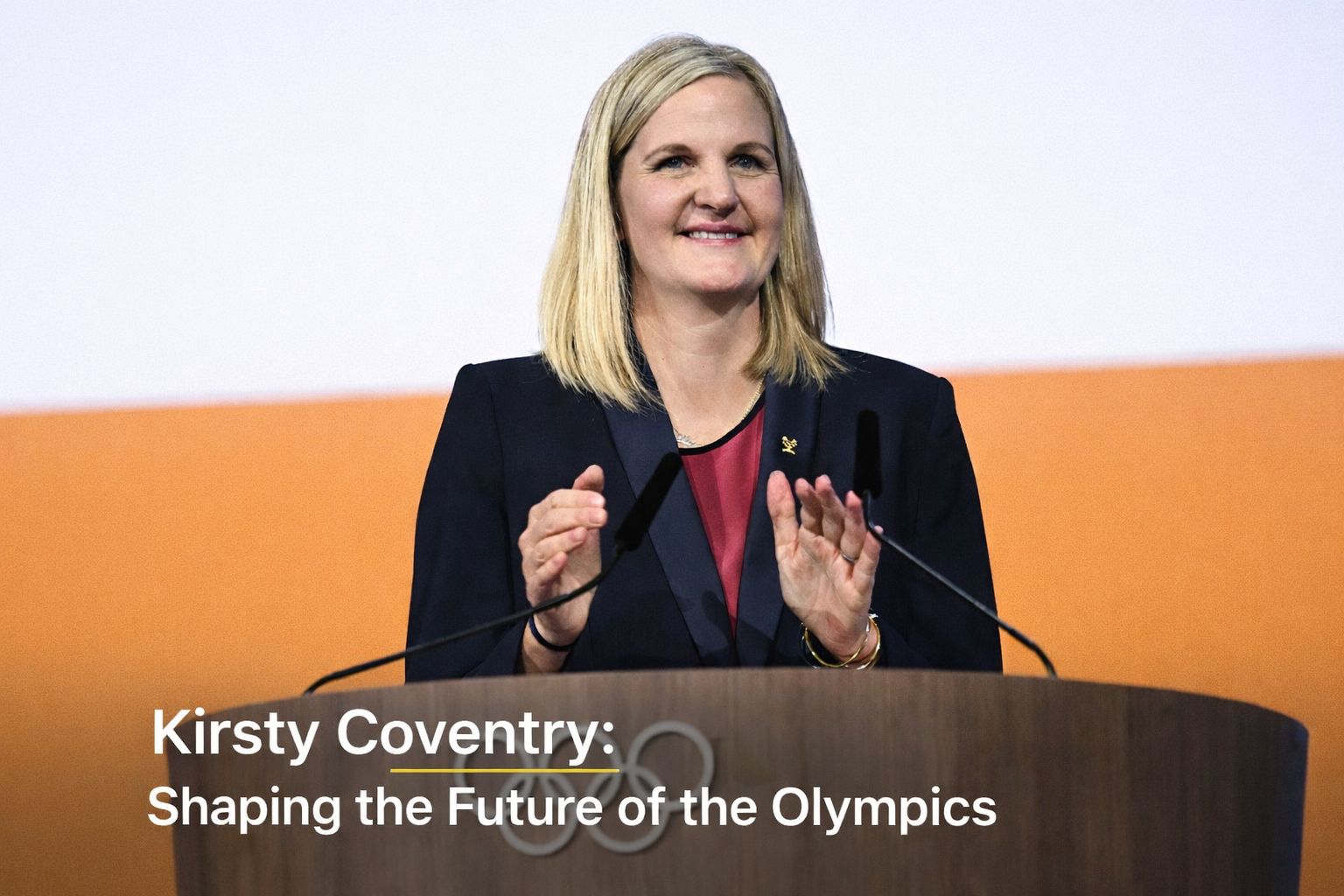

The Olympic Games have always been something more than sport. They are a mirror of their time, reflecting global politics, cultural shift, technological progress, and the changing idea of unity. As the world gears up for Milan–Cortina 2026, the Winter Olympics are stepping into yet another transformative moment. At the heart of this transition, standing strong, is Kirsty Coventry, a figure whose influence epitomises one of the many new chapters in Olympic leadership.
From the historical symbolism of two cauldrons, both lighting up at once in the Olympics, to a shared host model that was created with a focus on sustainability, the Milan Cortina 2026 is not just another Olympics. The Milan Cortina 2026 is a statement, and in many ways, it is a reflection of every ideal that has been associated with Kirsty Coventry’s vision.
Kirsty Coventry: From Olympic Champion to Global Sports Leader
Prior to her becoming a key voice in global sport governance, Dr Kirsty Coventry, as she now is, first became recognised globally as an elite sportswoman, competing for Zimbabwe and appearing at five Olympic Games, being Africa’s most decorated Olympian, and winning multiple medals as a swimmer.
Her trajectory, from the pool to the top echelon of sports management, is interesting. Unlike other traditional sports leaders, Coventry brings athlete voices into spaces usually led or dominated by individuals far removed from the realities of competition and is now using that athlete-first approach as the hallmark of her leadership.
However, over the years, the ascendance of Coventry in the world of the International Olympic Committee (IOC) came to be synonymous with broader institutional developments, namely, those that emphasised diversity, youth, and institutional reforms. The leading position of Coventry in the IOC serves not to illustrate continuity but evolution.
Why Kirsty Coventry Represents a Turning Point for the IOC
The situation faced by the Olympic Movement has never been so complex in its 130-year history. Rising costs of staging Olympics, climate change, decreased interest within the youth for traditional sports, and concerns over its governance have made the IOC re-think how to take the Olympics forward.
The leadership style of Kirsty Coventry closely mirrors this moment of reckoning, as she has been at the forefront in championing:
Sustainable hosting models
Athlete mental health and welfare
Gender Equality in Leadership
Broader Global Representation
Rather than being about spectacle, Coventry’s strategy for the mass events is all about long-term viability. Milan–Cortina 2026 now turns out to be a practical implementation of this
Milan–Cortina 2026: A Shared Vision Between Two Cities
Unlike previous Winter Games, which were centered in a singular host city, the Milan-Cortina 2026 Winter Olympics are envisioned as a collaborative effort, with the venues stretching across the north of Italy, with Milan and Cortina D’Ampezzo co-hosting the event.
Such an approach obviates the need for large pieces of single-use infrastructure, which is a direct response to perceived criticisms of the Olympics: that they burden host nations with white elephants and debt. These leadership philosophies, in keeping with those of Kirsty Coventry, are no longer in the realms of experimentation. Their time is in the future.
The decision to share the hosting of the Olympics stems from an acknowledgment that modern Olympics must be flexible and adapt to regional conditions and not follow a generalized approach to all nations.
Two Cauldrons, One Flame: A Historic First
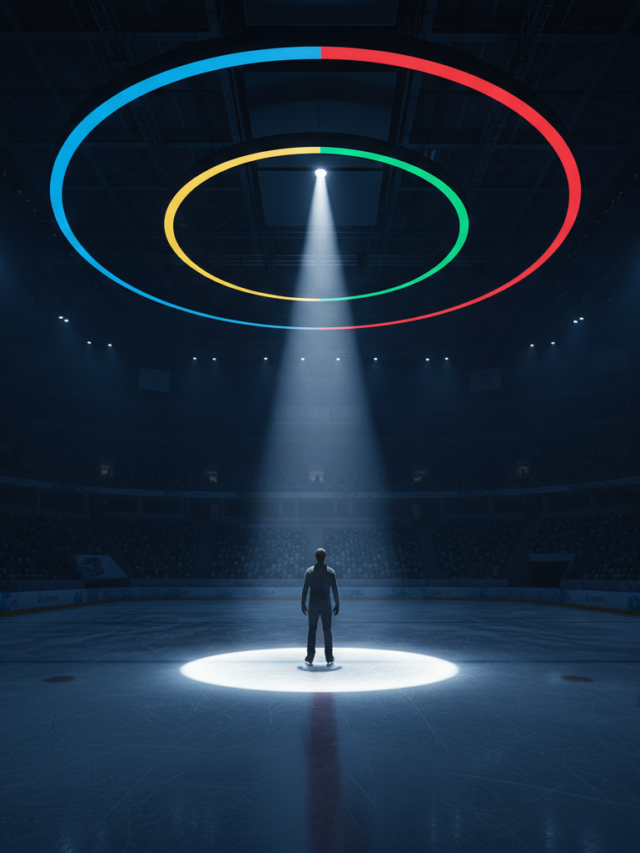
One of the most striking symbols of Milan–Cortina 2026 will appear during the Opening Ceremony: for the first time in Olympic history, two cauldrons will be lit — one in Milan and the other in Cortina d’Ampezzo.
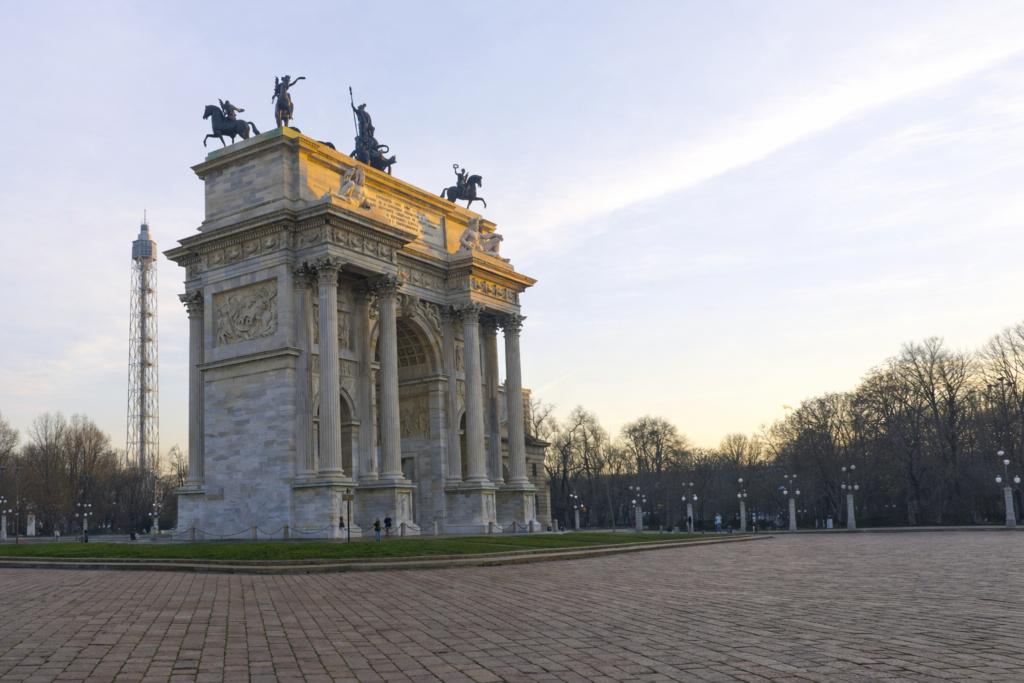
Milan’s cauldron will rise near the Arco della Pace.
The flame of Cortina will burn in the Piazza Dibona.
It’s an unprecedented decision, steeped in powerful symbolism: unity without centralisation, capturing what is at the heart of Coventry’s governance ideals. Instead of a strong focal point, the Games have tried to acknowledge that multiple identities can work in harmony.
Leonardo da Vinci’s Influence on the Olympic Design
The artistic inspiration used in Milan–Cortina cauldrons supports and reinforces such a message. Inspiration for the cauldrons was apparently taken from the works of the famous artist and scientist, Leonardo da Vinci, with special attention to his designs of
The knots used by Da Vinci represented the notion of continuity, connection, and balance, which are important concepts within Olympic philosophy. This mention of motifs, therefore, creates a unique blend of Italian cultural elements with globally recognized symbols, creating a story beyond sport.
This focus on significance over extravagance is a bigger cultural shift in the IOC, and one that has long been advocated by Kirsty Coventry.
Sustainability at the Core of Milan–Cortina 2026
Sustainability is no longer a mere talking point for the Olympics anymore. It is a necessity for the Olympics. It is the turn of the 2026 Olympics to prioritise its sustainability, and the Milan-Cortina 2026 has taken steps to ensure the same.
The key initiatives include:
Reuse of Existing Venues
C
Reduced carbon footprint through regional hosting
Longer-term urban integration with the Olympic infrastructure
These actions line up closely with Coventry’s advocacy for responsible planning for the Olympics. Instead of choosing locations for their aesthetic appeal, the Olympics strive to make positive, lasting impacts on the host nations.
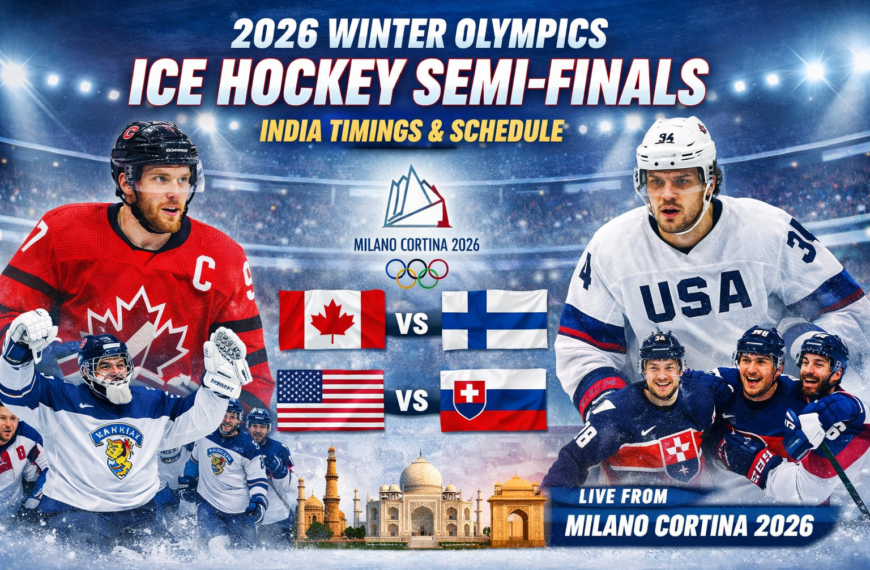
2026 Winter Olympics Schedule & Opening CeremonyAthlete-Centred Games in the Coventry Era
Perhaps the most defining feature of Kirsty Coventry’s influence would be her commitment to the welfare of athletes. As an Olympian in times past, she knows from a personal experience perspective the pressures that come with elite competition: physical, mental, and emotional.
Milan Cortina 2026 will likely reflect this emphasis through:
Improved design of the village for the athletes
Improved mental health support
Scheduling improvements that would minimize fatigue.
These may not be the changes that dominate headlines, but they represent a quiet revolution in how the Olympics are experienced by those that matter most: the athletes themselves.
The Opening Ceremony: Tradition Meets Modernity
The Milan–Cortina Opening Ceremony is expected to blend tradition and storytelling, particularly in modern times. In addition to the Parade of Nations, the ceremony is scheduled to include international and Italian cultural icons, which will further enhance the internationality of the Games.
Artists scheduled to perform include Mariah Carey, Andrea Bocelli, and Lang Lang, a diverse selection appropriate to the international nature of the Olympic Games as well as local tradition.
The dual cauldron lighting, which should come later in the process, should be the emotional touchpoint of the evening, a likely defining image of the Games as a whole.
Who Will Light the Olympic Cauldrons?
As is the case with most Opening Ceremonies around the world, the torch carriers have remained a mystery. However, one wonders about the many legendary Italian athletes.
Names frequently mentioned include:
Deborah Compagnoni
Alberto Tomba
Both are three-time Olympic gold medalists and national icons. Their involvement would link Italy’s past Olympic history with its future, a theme that is congruent with Coventry’s emphasis on continuity and renewal.
Gender Equality and Representation in the Olympic Future
One of Kirsty Coventry’s biggest contributions to the Olympic Movement has been in the area of gender equality. Notably, the advancements in gender equality under her supervision and influence were quantifiable.
The Milan Cortina 2026 Winter Olympics is expected to remain at a state of near gender parity, further cementing the notion that equity is no longer an aspiration, but rather a baseline requirement.
This normalization of inclusion is a cultural shift, extending far beyond this particular Games.
Milan–Cortina 2026 as a Blueprint for Future Olympics
What makes Milan–Cortina 2026 particularly significant is not just what it signifies now, but above all else what it portends for tomorrow.
- Future host cities are watching closely:
2. Will shared hosting reduce costs?
3. Can Sustainability and Spectacle Coexist?
4. Can symbolism replace excess?
For the 2026 Winter Games to be a template for success, it would likely reflect leadership qualifications presently embodied by Kirsty Coventry.
Public Trust and the Olympic Brand
The Olympic brand is based on public trust. Many scandals, boycotts, and political issues have impacted public trust in recent decades. Transparency and authentic factors can help restore public trust.
By putting meaning, inclusivity, and responsibility at the core, the Milan-Cortina 2026 strategy seeks to reconnect people with the original Olympic ideals. This approach is consistent with Coventry’s perspective that the Olympic Games must evolve without losing the soul.
Media, Digital Audiences, and the Next Generation
Another critical challenge facing the Olympics is the issue of relevance to the younger generation. Coventry has remained at the forefront of digital engagement, storytelling, and accessibility.
The expected events for the Milan-Cortina 2026
Enhanced digital broadcasts
Social media-first storytelling
Athlete-driven narratives
These strategies demonstrate an awareness that the modern Olympics are truly beyond television – they are a global, multi-platform event.
Conclusion: Kirsty Coventry and the Road Ahead
It will shine brighter than two cities as the Olympic flame is lit simultaneously in Milan and Cortina d’Ampezzo. This highlights the Olympic identity that is developing through unity, responsibility, and the world.
It is this development that Kirsty Coventry embodies, not as a symbol of change but as a transition from what the Olympics were to what they must become.
Through Milan-Cortina 2026, the Olympic Movement is not only organizing another edition of the Olympics but is also telling the world that the future is coming.
2026 Winter Olympics Schedule & Opening Ceremony
 By
By

 By
By