


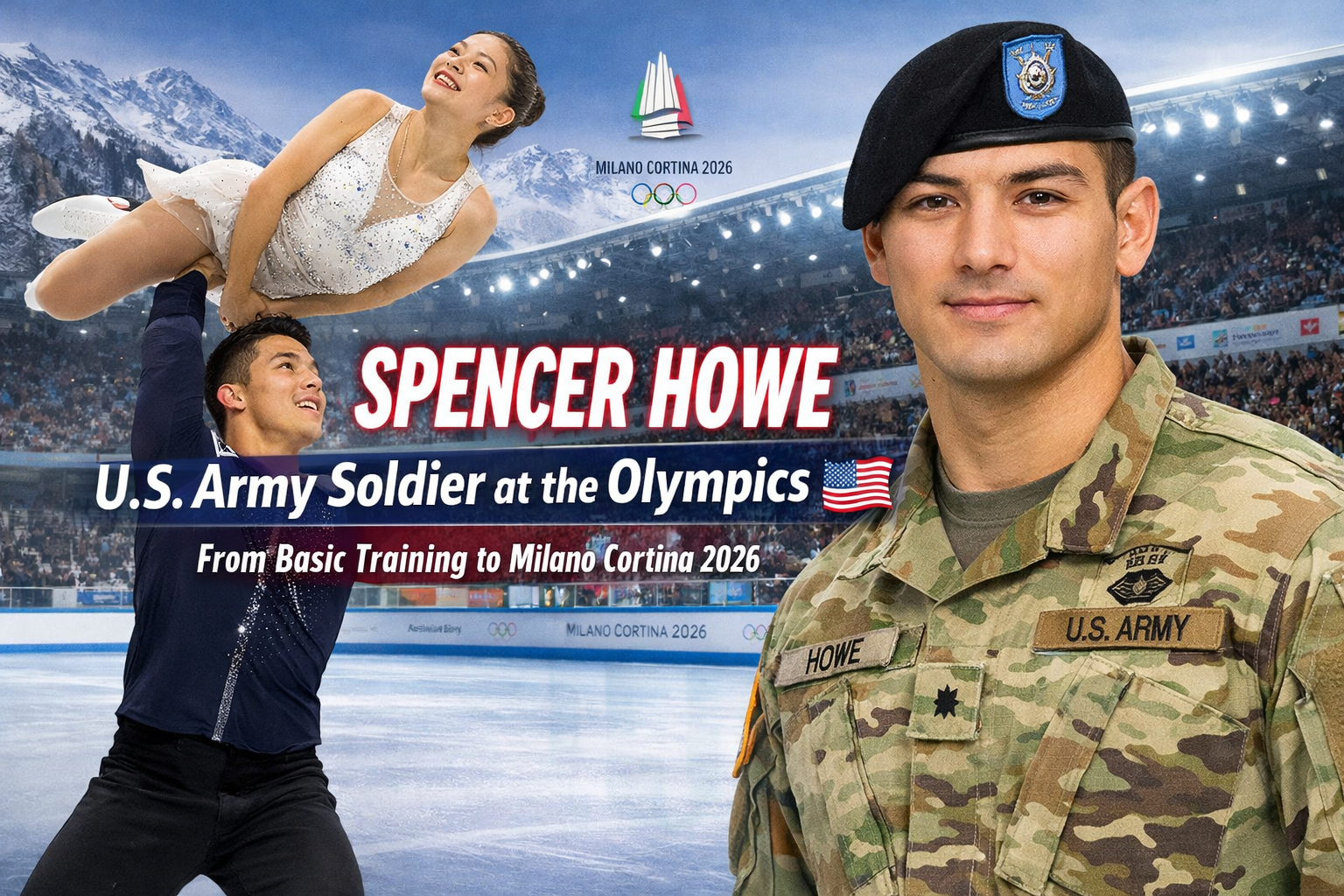

Spencer Howe: Soldier Skating Toward Olympic Glory at Milano Cortina 2026
When Spencer Howe steps onto the Olympic ice at the 2026 Winter Games, he won’t just represent Team USA as a pairs figure skater — he will carry the pride of the us Army with him. Competing at the 2026 Winter Olympics, Howe’s path to Milano Cortina has been anything but conventional.
Unlike most Olympic athletes who dedicate every waking moment solely to their sport, Spencer Howe balances elite-level figure skating with military service. As a U.S. Army soldier in the World Class Athlete Program (WCAP), Howe embodies discipline, resilience, and service — on and off the ice
From California Dreamer to Soldier
Spencer Howe, a California native, always harbored two dreams: to skate on the Olympic stage and to serve his country in uniform. As his skating career progressed and competitive demands increased, military service seemed like a distant possibility.
That changed when he learned about the U.S. Army’s World Class Athlete Program. WCAP allows top-ranked soldier-athletes to compete at the highest international levels while fulfilling military duties. For Howe, it was the opportunity of a lifetime.
In October 2024, Spencer Howe officially enlisted in the U.S. Army. Soon after, he began basic training at Fort Carson, Colorado — becoming the first figure skater to join WCAP.
The World Class Athlete Program (WCAP)
The World Class Athlete Program is a unique initiative that supports elite athletes in their Olympic pursuits while maintaining military careers. Active-duty soldiers, National Guard members, and reservists can train and compete globally.
Spencer Howe is one of nine Team USA athletes competing in Milano Cortina who are part of WCAP. His dual role highlights the program’s mission: to win medals for the United States while serving the nation.
Like fellow soldier-athlete Frank Del Duca, who pilots U.S. bobsled teams and also competes at the 2026 Winter Olympics, Howe represents a growing group of military athletes proving excellence in both arenas.
Five Months Off the Ice: A Major Setback
For a competitive figure skater entering an Olympic season, five months away from the ice can be devastating. Yet that’s exactly what happened to Spencer Howe.
During basic training and military commitments, Howe was unable to skate for nearly five months. When he returned to the rink in late June, regaining timing, strength, and synchronization wasn’t easy.
For pairs skating — where chemistry and precision are everything — time off can severely impact performance. Howe and his partner Emily Chan had to rebuild their rhythm from scratch.
But Howe views that period differently now.
Military training reshaped his mindset. Tasks became missions. Obstacles became objectives. Pressure became purpose.
A Soldier’s Mindset on the Ice
Basic training instilled a renewed discipline in Spencer Howe. He began approaching routines as assignments to complete rather than emotional battles to survive.
That mental shift became crucial during the 2025–26 competitive season.
Howe and Chan showed promise early, capturing bronze at the Trialeti Trophy and finishing fourth at Skate America. Still, their Olympic qualification would ultimately be decided at the 2026 U.S. Figure Skating Championships.
Olympic Dreams Nearly Slip Away
At nationals, disaster struck in the short program. Multiple falls dropped Howe and Chan to eighth place out of 10 teams. For many pairs, that would have meant the end of Olympic hopes.
Emily Chan later described it as her worst nightmare.
But Spencer Howe drew upon his soldier’s mentality. There was still a job to do.
Instead of dwelling on mistakes, the duo delivered a powerful response in the free skate. Their performance ranked as the third-highest scored free skate of the competition. They surged back to finish fourth overall — earning their second consecutive pewter medal at nationals.
Olympic Eligibility Opens the Door
Although they finished fourth, Olympic eligibility rules created an unexpected opportunity.
The national champions, Alisa Efimova and Misha Mitrofanov, as well as third-place finishers Katie McBeath and Daniil Parkman, were not eligible for Olympic selection due to citizenship requirements.
That cleared the path for Spencer Howe and Emily Chan to secure the second U.S. pairs Olympic berth.
The official announcement confirmed it: Spencer Howe was headed to the Olympics.
Competing at the 2026 Winter Olympics
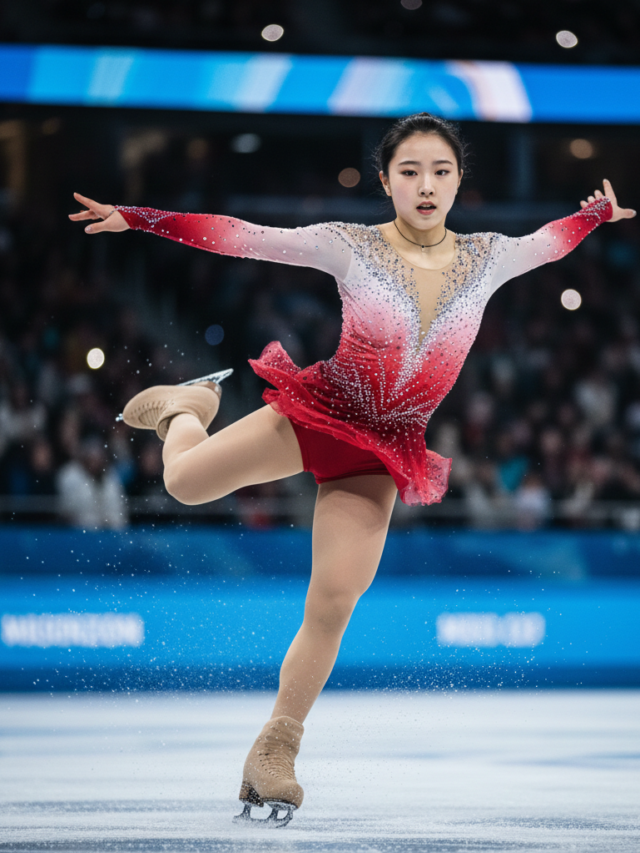
Howe and Chan will compete in the pairs event on February 15–16 at the 2026 Winter Olympics.
For Spencer Howe, the Olympic Village experience carries unique meaning. Between practices and competition preparation, he continues remote check-ins with his platoon sergeant. Even while skating under the Olympic rings, he remains a soldier.
This balance of service and sport sets him apart from nearly every other athlete in the field.
Life Beyond the Olympics
After Milano Cortina, Spencer Howe won’t transition into a post-Olympic vacation. He will return to active duty.
Currently serving as a motor transport operator, Howe also has long-term ambitions within the Army. He hopes to become a military chaplain and is actively working through the necessary educational requirements.
His journey reflects long-term commitment — not just to skating, but to service.
The Broader Military-Olympic Connection
Spencer Howe isn’t alone in representing both the Olympic rings and the American flag through military service.
Frank Del Duca, an Army Sergeant and bobsled pilot, also competes in Milano Cortina. Stationed at Lake Placid, Del Duca’s mission is straightforward: win medals for the United States.
Like Howe, Del Duca credits military training for sharpening his mental toughness. Both athletes demonstrate how structured discipline, preparation, and resilience translate across vastly different arenas.
The Army’s investment in elite sport through WCAP is producing not just competitors, but leaders.
Why Spencer Howe’s Story Resonates
Spencer Howe’s story is compelling for several reasons:
- Dual Identity: Elite Olympic athlete and active-duty U.S. Army soldier.
- Historic Milestone: First figure skater to join WCAP.
- Mental Resilience: Overcame five months off the ice during Olympic qualification year.
- Mission-Oriented Mindset: Applies military principles directly to high-pressure competition.
- Future Vision: Aspires to become a military chaplain after competitive skating.
In an era when Olympic preparation is increasingly specialized and singular, Spencer Howe proves it’s possible to pursue multiple high-stakes callings simultaneously.
Spencer Howe’s Competitive Strengths
Technically, Howe is known for:
- Strong overhead lifts
- Controlled throw jumps
- Stable pair spins
- Improved endurance post-military training
- Emotional maturity under pressure
The physical demands of Army training may have briefly sidelined his skating, but they also enhanced his stamina and mental grit.
The Emotional Weight of Representation
Representing Team USA always carries significance. But for Spencer Howe, it carries additional meaning.
He serves the United States in uniform and competes for it in sport. Few athletes can claim that dual honor.
Standing on Olympic ice in Italy, Howe embodies not just athletic excellence but national service. The pride of skating for Team USA merges with the pride of wearing the Army insignia.
What to Expect in the Pairs Event
The pairs field at the 2026 Winter Olympics is deep and competitive. European powerhouses traditionally dominate, but American pairs teams have shown steady growth in recent years.
For Spencer Howe and Emily Chan, the goal will be clean execution.
If they replicate their nationals free skate performance — strong lifts, synchronized spins, and confident throws — they could contend for a top-five finish.
Regardless of placement, their presence alone marks a remarkable achievement.
Final Thoughts: No Regrets, Only Purpose
Spencer Howe calls his decision to join the U.S. Army “a door of opportunity” he chose to walk through — with no regrets.
That choice temporarily complicated his Olympic journey but ultimately strengthened it. Military service reshaped his mental approach, deepened his resilience, and added profound purpose to his Olympic appearance.
As he takes the ice in Milano Cortina, Spencer Howe represents something larger than medals.
He represents commitment.
He represents discipline.
He represents service.
And above all, Spencer Howe represents what it means to chase two dreams at once — and make them both a reality.
This article is for informational and news purposes only. All names, trademarks, and images belong to their respective owners. We are not affiliated with or endorsed by the U.S. Army, Team USA, or the Olympic Games. Readers should verify details from official sources.

 By
By

 By
By